Stop The Gutter Grumbles: Maintenance Tips That Keep Water Flowing
A healthy gutter system protects your home from water damage and supports the long-term condition of your roof and foundation. When gutters move rainwater away from the home as intended, moisture stays where it belongs. When they clog, water can spill over the edges and create problems such as fascia rot, soil erosion, stained siding, and even foundation movement.
Austin often experiences sudden, heavy downpours. These fast bursts of rain can overwhelm gutters that have not been cleaned or maintained. Routine upkeep lowers the risk of water-related damage and helps your home stay protected through every season.
How Often You Should Clean and Inspect Gutters
Most homes should have their gutters cleaned at least twice a year. Many Austin properties benefit from more frequent checks due to the amount of debris produced by oak, cedar, and pecan trees.
Storms add pollen, branches, and roof granules to your gutters. After major weather events, walk your property and look for early warning signs such as overflowing water, small plants growing inside the gutters, sagging sections, or stains along the fascia. Any of these signs indicate restricted water flow.
Safety First: Preparing for a Cleaning
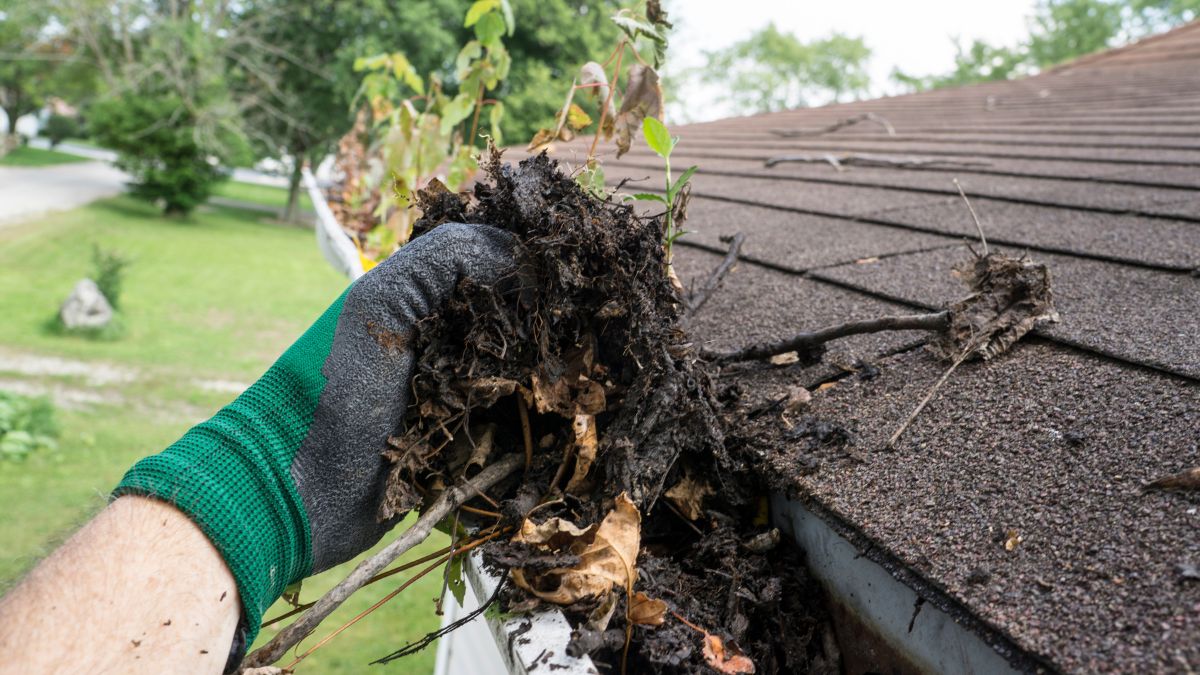
Gather the right tools before you begin. Use a sturdy ladder placed on level ground. Wear gloves and use a small scoop to remove debris.
Avoid leaning the ladder directly on the gutter, since this can dent the metal or loosen hangers. Never attempt to clean gutters during high winds or storms. If your roof is steep or your home has more than one story, calling a professional is the safer choice.
Step-by-Step Gutter Cleaning Guide
- Remove leaves, twigs, and debris from the gutter trough. Work toward each downspout.
- Check each downspout for blockages. Use a hose to flush debris, or use a plumber’s snake for compacted material.
- Inspect the gutter slope. Water should move toward the downspout without pooling.
- Rinse the entire system with a garden hose. Confirm that water flows freely.
How to Inspect for Early Signs of Trouble
As you clean, keep an eye out for rust, holes, and separated joints. Look at the fascia and soffit for staining or softness, which often indicates overflow or trapped moisture.
Check hangers and brackets to make sure the system is secure. Replace worn or cracked sealant around joints and end caps. Catching small issues early helps prevent leaks, sagging, and long-term damage. Leave major repairs to trained professionals. Here are more signs of gutter issues.
Maintaining Downspouts and Drainage Paths
Downspouts play a key role in moving water away from your foundation. Make sure each one releases water several feet from the home.
Extensions, splash blocks, or underground drains can improve drainage and help prevent soil erosion. After heavy rain, check for water pooling near the house. Pooling often means a downspout is blocked or undersized. Upgrading to a larger style can help homes with steep or expansive roofs.
Seasonal Gutter Care Checklist
Spring: Inspect for hail or storm damage. Watch for roof granules in the gutters.
Summer: Heat can loosen sealant and fasteners. Walk the perimeter of your home and make sure nothing has shifted.
Fall: Leaves drop quickly in many Austin neighborhoods. Clean the gutters often and watch roof valleys where debris collects.
Winter: Mild freezes can create ice inside clogged gutters. After cold spells, confirm that water flows freely.
Long-Term Upgrades That Reduce Maintenance
Seamless gutters reduce leaks and outperform older sectional systems. If your gutters clog, sag, or leak often, a full replacement may be the best long-term solution.
Modern seamless gutters come in multiple sizes and colors, allowing you to match them to your home’s trim. Micro mesh guards can also reduce ongoing maintenance. They help keep out leaves and small debris while allowing water to pass through.
These guards perform well in areas with heavy tree coverage and can extend the life of your gutter system.
If you are thinking about a full upgrade, contact KangaRoof for a free quote. A professional evaluation can help you compare materials, gutter sizes, and guard options.
Gutter Maintenance Tips for Tall or Complex Roofs
Homes with multiple rooflines or two stories collect debris in more areas. Upper roof levels often shed leaves directly into lower gutters.
Use binoculars if you cannot safely access these areas. If your roof is steep or your home is tall, schedule regular cleanings with a professional crew. This protects you and ensures the system performs correctly.
When to Call a Professional
Give us a call if you notice sagging, leaks, recurring overflow, or fascia damage. Professional help is also important when access is unsafe or when repairs require specialized tools.
Our trained team can repair, or replace damaged components and confirm that your system can handle Austin’s heavy rains.
Regular maintenance and smart upgrades help your gutters work efficiently and protect your home throughout the year.