How Roof Ventilation Stops Attic Heat Before It Takes Over Your Home
Roof ventilation keeps air moving through the attic. This steady airflow helps prevent heat and moisture from settling. It also supports insulation and reduces strain on cooling systems.
In Central and North Texas (check out our DFW roofing services), summers are long and humid. Proper ventilation helps maintain a healthier roof and a more comfortable home.
How Airflow Works in a Roof System
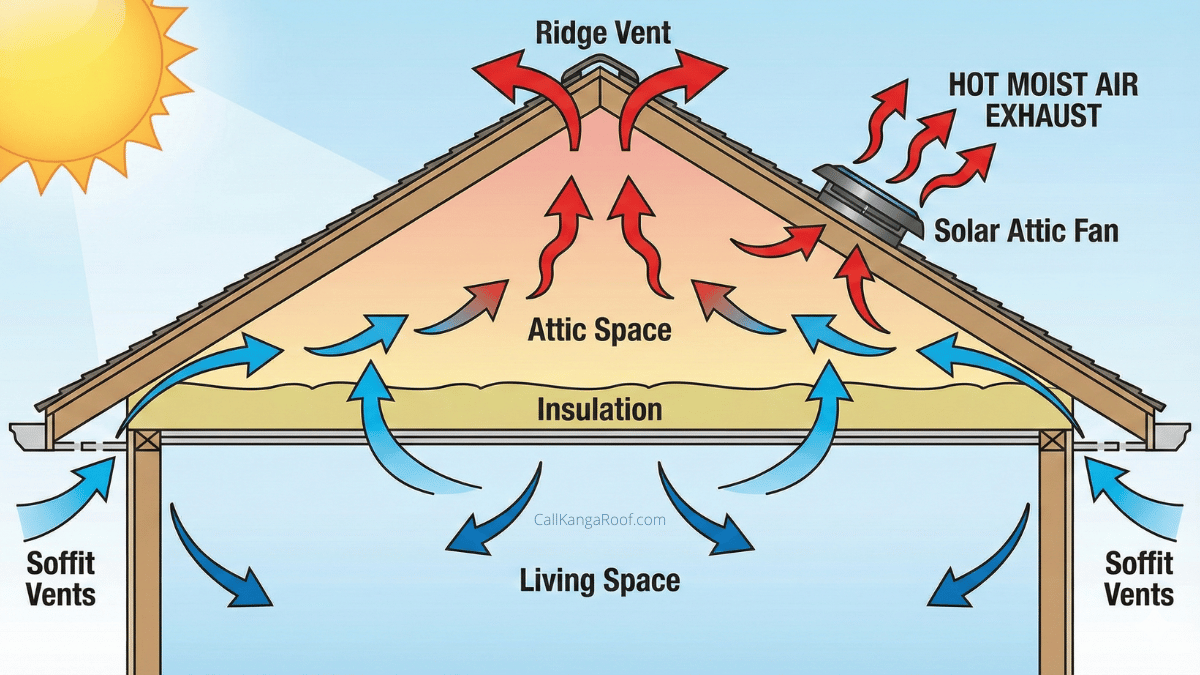
A roof ventilation system uses two parts. Intake vents pull cooler outside air into the attic. Exhaust vents release warm air near the roof peak.
This airflow cycle runs continuously. When intake and exhaust are balanced, attic temperatures stay closer to outdoor levels. If airflow slows, heat and moisture begin to build and affect the roof.
In summer, a poorly ventilated attic can become extremely hot. In winter, warm indoor air that reaches the attic can get trapped if exhaust vents cannot release it. Both situations strain shingles and decking and increase energy use.
The Core Components of Roof Ventilation
Intake Vents
Soffit vents are the most common intake option. They run along the roof overhang and pull fresh air into the attic.
If insulation or paint covers these vents, the system weakens. Homes without soffits can use edge vents or other retrofit intake solutions.
Exhaust Vents
Ridge vents provide consistent exhaust along the roof peak. Box vents move air out of smaller roof sections. Turbines use wind to draw air outside.
Powered attic fans move air with electricity. They require proper intake or they may pull conditioned indoor air from the home. The best option depends on roof shape and local conditions.
Attic Conditions That Support Ventilation
Once air enters the attic, it must move without obstruction. Baffles keep insulation from blocking soffit vents. Insulation should sit on the attic floor rather than against the roof decking.
When pathways stay clear, ventilation and insulation work together to manage heat and moisture.
How Air Moves Through the Attic
Cooler air enters through intake vents. As it warms, the air rises and moves toward exhaust vents.
This cycle refreshes the attic and reduces heat and moisture. Blocked intake slows airflow. Limited exhaust traps heat. Balanced ventilation protects shingles, decking, and insulation.
What Happens When Ventilation Fails
Heat Buildup
Excess heat accelerates shingle aging. It can also warp the roof deck.
When heat builds up, cooling systems work harder and indoor comfort suffers.
Moisture Problems
Warm, humid air can condense inside the attic. This leads to damp insulation, mildew, and soft or stained decking.
Seasonal humidity increases the chance of moisture issues. Poor airflow also slows drying after storms.
Ice Damming
Ice dams are uncommon in Texas but possible during extended cold periods. Warm attic air can melt roof snow that refreezes at the edges. Ventilation helps reduce this risk.
Signs Your Roof Is Not Ventilating Well
Signs include curling shingles, uneven attic temperatures, mildew, damp insulation, or musty odors.
A roofing professional can use tools such as infrared imaging or moisture meters to identify ventilation problems.
Common Ventilation Setups for Homes
Ridge Vent + Soffit Vent
This balanced setup works well for many Texas homes. It supports steady airflow without mechanical parts.
Turbines
Turbines move air effectively in areas with consistent wind. They need periodic inspection to stay functional.
Powered Attic Fans
These fans help reduce heat when paired with proper intake. Without enough intake, they may pull air from living spaces.
Homes Without Soffits
Edge vents and retrofit solutions create alternative intake paths. A professional can determine the best option for the home.
Ventilation and Roof Longevity and Comfort
Good ventilation reduces heat stress on shingles. It helps insulation perform as intended and lowers the chance of moisture-related damage.
Homes may feel more comfortable, and energy use may decrease. Proper airflow can extend the life of the roof.
When to Call a Professional
Homeowners can look for blocked vents or visible signs of heat or moisture. Diagnosing airflow issues requires experience.
A roofing professional can review the system and recommend improvements. Ventilation upgrades often fit well with roof repairs or replacements.
Get a Free Roof Ventilation Assessment
If you want to understand how well your roof is ventilating, KangaRoof can help. Our team will inspect your attic and evaluate the ventilation layout.
We will outline next steps if improvements are needed. If your attic is feeling a lot hotter than it should, schedule an assessment, today.