
Key Takeaways
- Roof damage almost always gets worse over time.
- Small leaks can lead to decking, insulation, mold, and interior damage.
- Material and labor costs typically increase over time.
- Existing roof damage can worsen significantly during future storms.
- Insurance issues can become more complicated when damage is left unaddressed.
- Early inspections often provide more repair options and lower costs.
- The sooner you understand the condition of your roof, the more control you have over the outcome.
Most homeowners do not wake up thinking about their roof.
Maybe you noticed a water stain on the ceiling. Maybe a few shingles blew off during a recent Central Texas storm. Or perhaps a roofing contractor mentioned a repair during an inspection, but it did not seem urgent.
The problem is that roof damage rarely stays the same.
At KangaRoof, we've spent more than 25 years helping homeowners throughout Austin, Round Rock, Cedar Park, Georgetown, and surrounding communities evaluate roof damage. One of the most common conversations we have starts with a homeowner asking:
- How long can I wait to repair my roof?
- Is a small roof leak really a big deal?
- Will waiting save me money?
- What happens if another storm hits before I fix it?
In this article, you'll learn why delaying a roof repair often leads to higher costs, larger repairs, insurance complications, and preventable damage. More importantly, you'll understand when a repair should move to the top of your priority list and what steps to take next.
Can You Wait to Repair a Roof?
Sometimes, yes.
But waiting only makes sense if the issue has been professionally evaluated and determined to be low risk.
The reality is that most roof problems get worse over time.
Your roof is constantly exposed to:
- Sun and UV damage
- Wind
- Rain
- Hail
- Temperature swings
- Humidity
Once water finds a way inside, the clock starts ticking.
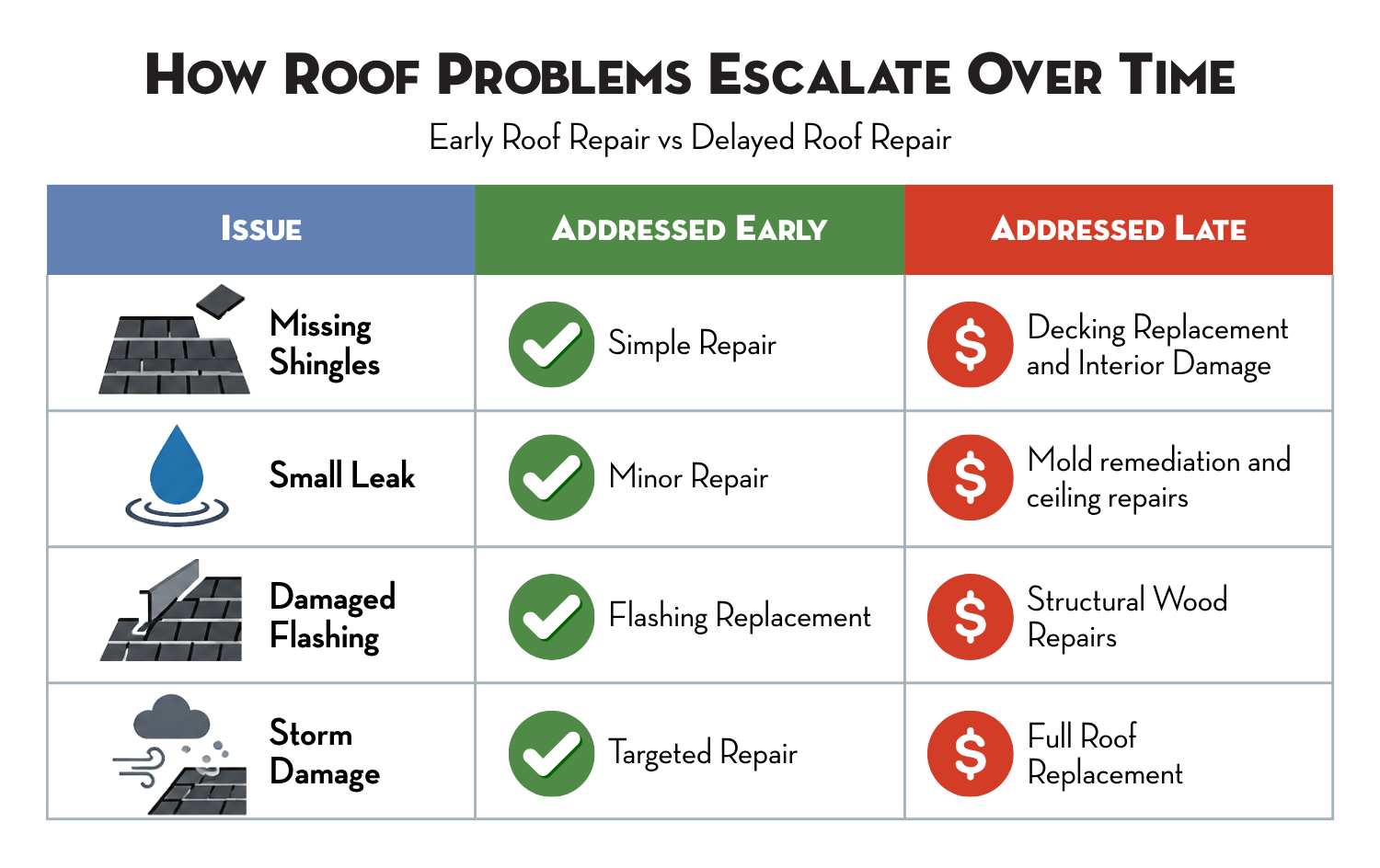
What may have been a simple repair today can become a much larger project months later.
Why Does Roof Damage Get More Expensive Over Time?
Because the roof itself is often only the beginning of the problem.
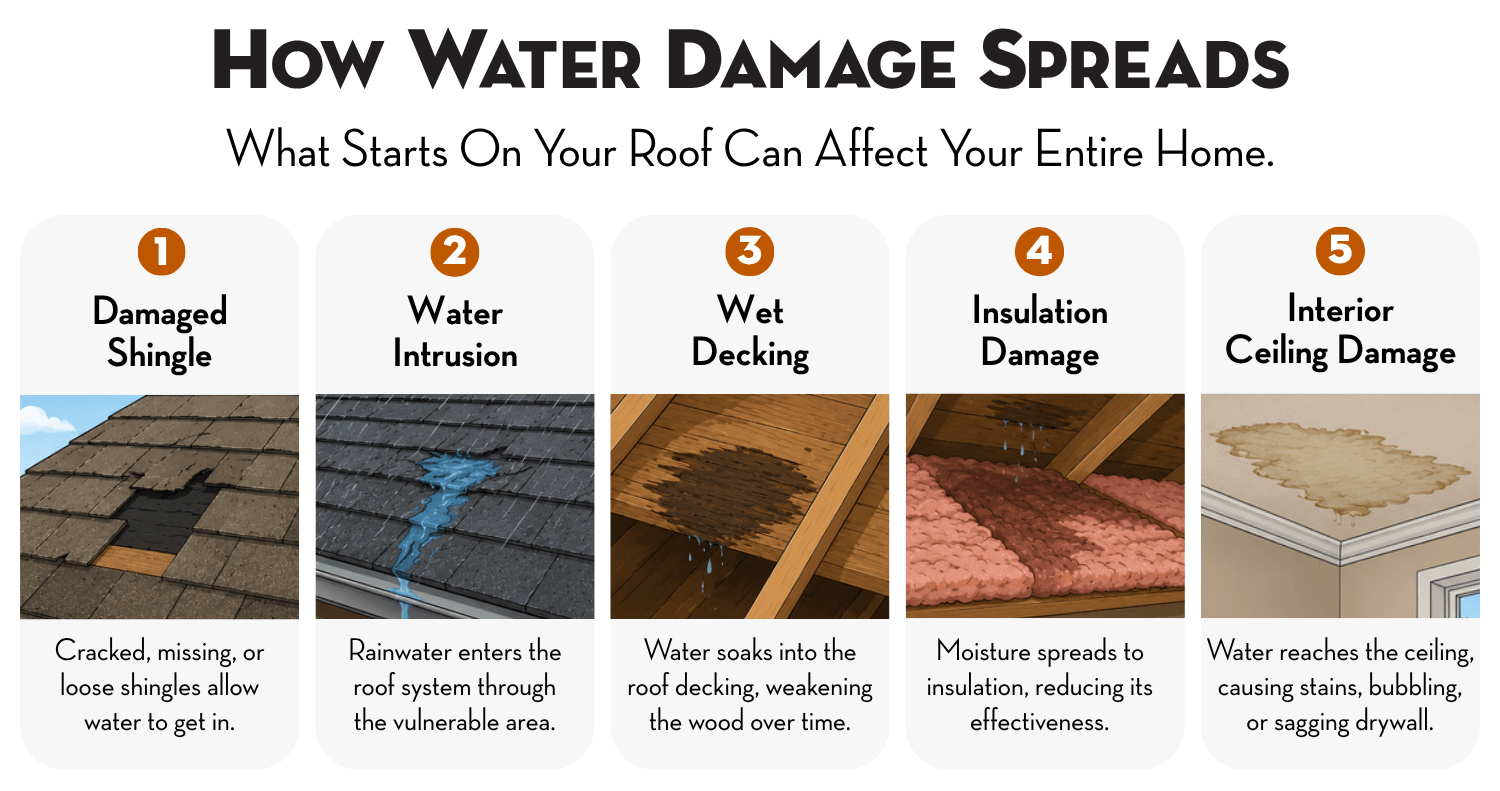
When moisture enters the roofing system, it can affect multiple parts of your home.
Common secondary damage includes:
- Wet insulation
- Rotting roof decking
- Damaged rafters
- Mold growth
- Ceiling stains
- Drywall damage
- Flooring damage
- Electrical issues
A repair that might have cost a few hundred dollars can eventually become a project involving multiple trades and thousands of dollars in additional work.
What Happens When a Roof Leak Is Left Alone?
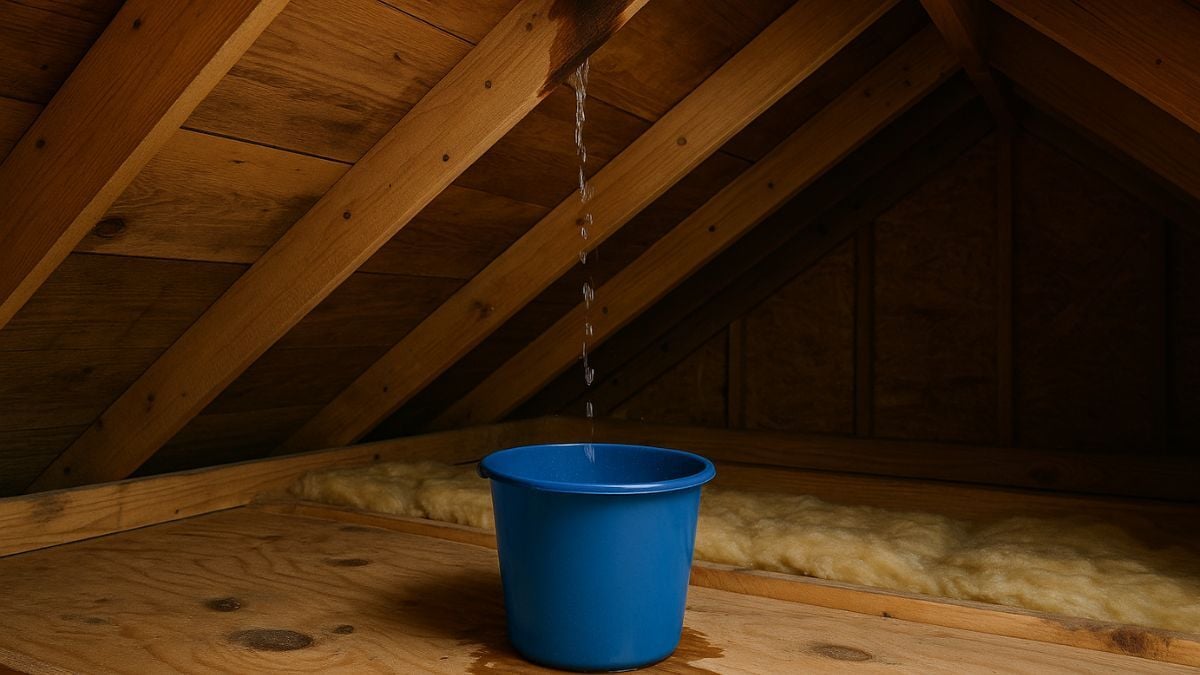
Water rarely travels straight down.
It often moves sideways through decking, insulation, framing, and wall cavities before becoming visible inside the home.
This means the stain you see on your ceiling may not be directly below the source of the leak.
By the time homeowners notice visible signs of damage, moisture may have already affected areas they cannot see.
Common signs that a leak has been active longer than expected include:
- Musty odors
- Sagging drywall
- Soft spots in ceilings
- Mold growth
- Peeling paint
- Increased energy bills from damaged insulation
In Central Texas, one heavy rainstorm can significantly increase existing damage.
Will Roofing Prices Be Lower If You Wait?
Historically, roofing prices have increased over time, not decreased.
Roofing materials are tied to:
- Manufacturing costs
- Transportation costs
- Labor costs
- Petroleum-based products
- Supply chain availability
Over the past several years, homeowners have experienced multiple material price increases from roofing manufacturers.
While pricing fluctuations happen, there is little evidence that waiting several months or years will result in a lower replacement cost.
If the roof ultimately needs repair or replacement, delaying often means paying more for the same work.
What Happens If Another Storm Hits Before Repairs Are Made?
This is where many homeowners get caught off guard.
Austin and Central Texas experience frequent hailstorms, windstorms, and severe weather events.
If your roof already has existing damage when another storm arrives:
- Existing leaks can worsen
- Additional shingles may be lost
- Water intrusion can increase
- Insurance claim complexity can increase
- Repairs may become replacements
There's another challenge.
After major storms, roofing contractors become extremely busy.
Scheduling delays often increase because:
- More homeowners need inspections
- Material demand rises
- Repair schedules fill quickly
Addressing known issues before storm season often gives homeowners more flexibility and more options.
Can Waiting Affect Your Homeowners' Insurance?
In some situations, yes.
Insurance companies generally expect homeowners to take reasonable steps to prevent additional damage after discovering a problem.
If known damage is ignored for an extended period, coverage disputes can become more complicated.
Insurance carriers have also increased scrutiny on aging and deteriorated roofs in recent years.
Some homeowners discover roofing issues during:
- Policy renewals
- Home inspections
- Property sales
- Storm claim inspections
When that happens, repairs often need to happen on someone else's timeline.
Addressing concerns early allows you to:
- Compare contractors
- Plan your budget
- Understand your options
- Schedule work at a convenient time
How Do You Know If a Roof Repair Has Become Urgent?
Certain signs should be evaluated immediately.
These include:
- Active leaks
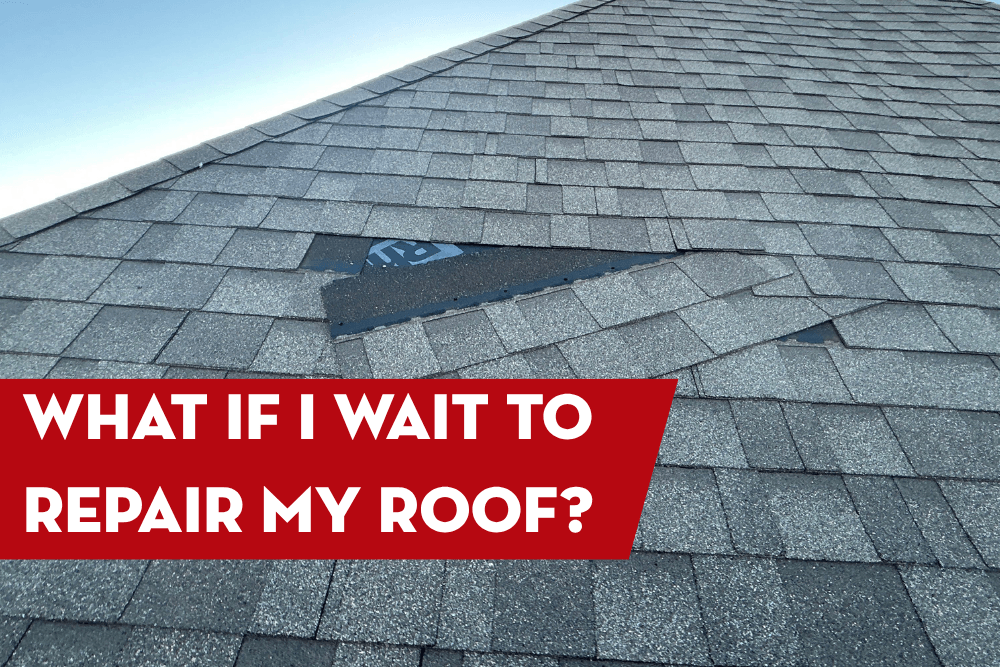
- Missing shingles
- Exposed decking
- Interior water stains
- Sagging roof sections
- Hail damage
- Flashing failures
- Visible mold growth
If you notice any of these conditions, scheduling a professional roof inspection is the safest next step.
The goal is not necessarily to replace the roof.
The goal is to determine the actual condition before the problem grows.
The Real Cost of Waiting
The biggest risk of delaying a roof repair is not the repair itself.
It is everything that can happen while you wait.
A roof issue rarely stays isolated. Water spreads. Damage expands. Costs increase. Options become more limited.
That does not mean every roof problem requires immediate replacement.
It does mean that getting accurate information early gives you the best chance to make a smart decision.
The sooner you understand what's happening on your roof, the easier it becomes to decide what comes next.
Need Answers About Your Roof?
If you've noticed signs of roof damage or you're unsure whether a repair can wait, KangaRoof can help.
Our team provides honest roof inspections for homeowners throughout Austin, Round Rock, Cedar Park, Georgetown, Leander, Pflugerville, Hutto, Taylor, and surrounding Central Texas communities.
We'll help you understand:
- What damage exists
- Whether repair or replacement makes sense
- What risks are present
- What options are available
No pressure. Just clear answers so you can make the right decision for your home.

Topics: