Key Takeaways
- Roofing prices have increased because material, labor, and gas prices have increased.
- Contractors pay higher prices for the same products than they did several years ago.
- Extremely low bids often deserve additional scrutiny.
- Not all shingles offer the same durability, performance, or warranty coverage.
- Cheap contractors use closeout, discontinued, or retail-purchased materials to reduce costs.
- Manufacturer-backed roofing systems provide additional protection and accountability.
- Comparing roofing estimates requires looking beyond the final price.
A few years ago, your neighbor replaced their roof and paid one price. Today, you're collecting estimates and discovering that the numbers look much different.
Maybe you've received three proposals, and one is significantly lower than the others. Maybe you're wondering why roofing prices seem to increase every year. Or maybe you're questioning whether the more expensive estimate is actually worth the extra cost.
These are important questions, and understanding the answers can help you make a better roofing decision.
At KangaRoof, we've watched manufacturers repeatedly raise prices on shingles and roofing materials over the last several years. We've also seen how those increases affect homeowners trying to compare estimates and make the right decision for their homes.
In this article, you'll learn why roofing prices continue to rise, what separates a quality roofing system from a budget option, why some contractors can offer significantly lower prices, and the questions you should ask before signing a contract. By the end, you'll have the information you need to compare roofing estimates with confidence and understand what you're actually paying for.
Why Do Roofing Manufacturers Keep Raising Prices?
The short answer is that roofing materials cost more to produce and distribute than they did just a few years ago.
Major manufacturers have announced multiple price increases across shingles, underlayment, ventilation products, ridge caps, and other roofing components.
Several factors contribute to these increases:
- Rising transportation costs
- Higher manufacturing expenses
- Increased labor costs throughout the supply chain
- Greater demand following severe storm seasons
- Inflation affecting raw materials and production
When manufacturers increase pricing, roofing contractors pay more for the same materials. Those costs eventually impact roof replacement estimates.
This isn't unique to roofing. Homeowners have seen similar increases with vehicles, appliances, lumber, and home improvement projects.
Are Roofing Companies Making More Profit Because Prices Increased?
Not necessarily.
Most reputable roofing contractors operate on relatively consistent margins. When material costs rise, the cost of delivering a complete roofing system rises as well.
A contractor who purchased shingles for one price last year may pay substantially more for the same product today.
In many cases, roofing companies are working to maintain quality while managing higher labor and material expenses.
Higher prices are certainly part of the conversation. Just as important is understanding why roofing estimates can vary so dramatically from one contractor to another.
Why Is One Roofing Estimate So Much Cheaper Than the Others?
When you receive three or four estimates, it's common to see one proposal that comes in significantly lower.
Sometimes there is a legitimate reason.
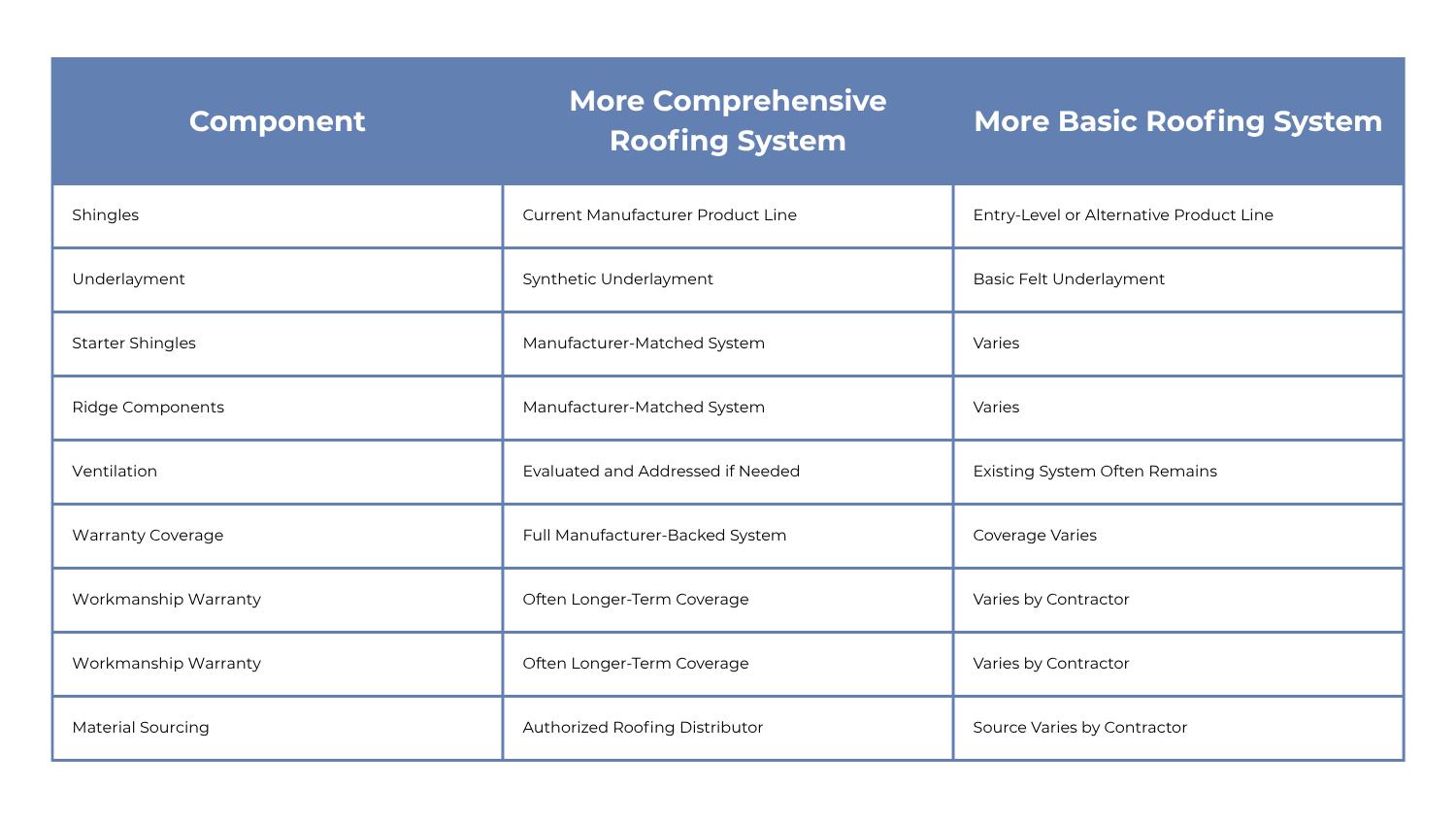
Other times, the lower price is achieved by reducing quality somewhere in the project.
That may include:
- Lower-grade shingles
- Fewer roofing accessories
- Cheaper underlayment
- Reduced ventilation improvements
- Limited workmanship warranties
- Uncertified installation crews
- Materials purchased through non-traditional channels
A lower price does not automatically mean a bad contractor.
However, a dramatically lower price deserves additional questions.
Are All Asphalt Shingles the Same?
No.
Many homeowners assume all asphalt shingles perform similarly because they look alike from the ground.
In reality, manufacturers produce multiple product lines designed for different budgets and performance levels.
Differences often include:
- Wind resistance ratings
- Impact resistance ratings
- Algae protection
- Warranty coverage
- Thickness and durability
- Manufacturer support programs
Two roofs may look nearly identical on installation day, but perform very differently over the next 15 to 30 years.
That's why comparing roofing estimates based solely on price can be misleading.
What Should Homeowners Know About Big Box Store Roofing Materials?
Many homeowners are surprised to learn that not every roofing contractor sources materials the same way.
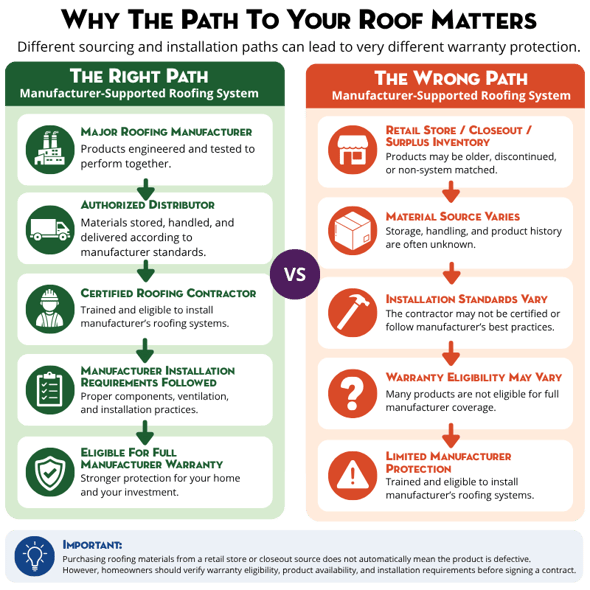
Established roofing companies typically purchase materials through authorized distributors that work directly with manufacturers.
Some lower-cost contractors may purchase:
- Closeout inventory
- Discontinued product lines
- Overstock materials
- Liquidation inventory
- Retail products from big box stores
That does not automatically mean the materials are defective.
However, homeowners should ask important questions:
- Is this product currently supported by the manufacturer?
- Does it qualify for a manufacturer’s warranty?
- Can replacement materials be obtained in the future?
- Is the contractor providing documentation for the roofing system being installed?
If those questions cannot be answered clearly, homeowners should proceed carefully.
Why Manufacturer Warranties Matter
Many homeowners focus on the shingle itself.
The warranty often deserves just as much attention.
A manufacturer-backed roofing system can provide valuable protection if a product issue occurs.
Before signing a contract, ask:
- What manufacturer is providing the warranty?
- What warranty documentation will I receive?
- Does the contractor have manufacturer certifications?
- Are all roofing components approved within the same roofing system?
A quality warranty doesn't guarantee a roof will never have issues.
It does provide accountability and support if problems arise.
What Questions Should You Ask Before Hiring a Roofing Contractor?
Price matters.
It just shouldn't be the only factor.
Ask every contractor:
- What exact shingle will be installed?
- Who manufactures it?
- What warranties are included?
- Is the product purchased through an authorized distributor?
- What workmanship warranty do you provide?
- Are your crews trained and insured?
- What roofing accessories are included in the estimate?
The answers often reveal far more than the final dollar amount.
The Cheapest Roof and the Best Value Are Not Always the Same
A roof replacement is one of the largest investments many homeowners will make.
While rising roofing prices can be frustrating, choosing the lowest estimate without understanding what's included can create bigger expenses later.
The goal isn't to find the cheapest roof.
The goal is to find the best value for your home, your budget, and your long-term protection.
When comparing estimates, ask questions about materials, warranties, installation standards, and product sourcing. Those answers will help you make a decision based on facts rather than price alone.
Need Help Comparing Roofing Estimates?
If you're comparing multiple roofing proposals and want a clear explanation of what's included, KangaRoof can help.
Our team provides honest roof inspections, detailed estimates, and straightforward answers about materials, warranties, and roofing systems.
Schedule an inspection today and get the information you need to make the right decision for your home.

Related reading
- Roof Replacement Cost in Austin, TX: 2026 Price Guide
- Why KangaRoof's Quotes Cost More Than Some Other Roofers
- How Much Does Roof Repair Cost in Central Texas?
- Instant roof cost calculator
- Round Rock roofing company: repair, replacement and hail help
- How Much Does a New Roof Cost in Texas? 2026 Price Guide
- How to Finance a New Roof in Texas: Options Compared (2026)
Topics: