Key Takeaways
- Texas does not require roofing contractors to hold a state license.
- Roofing contractors are not required to carry insurance.
- Local companies are often easier to reach for future warranty needs.
- Low estimates frequently leave out important roofing components.
- Company longevity matters just as much as warranty length.
- Manufacturer certifications can indicate higher professional standards.
- Contracts should clearly define materials, scope, warranties, and payment terms.
- Comparing multiple estimates helps homeowners make better decisions.
After a hailstorm, many homeowners suddenly find themselves searching for a roofing contractor.
Maybe you noticed shingles in the yard. Maybe water stains appeared on the ceiling. Maybe your insurance company mentioned roof damage. Before long, contractors start knocking on doors, advertisements fill your mailbox, and everyone seems to have a different opinion about what your roof needs.
The problem is that choosing a roofing contractor in Texas can be surprisingly difficult.
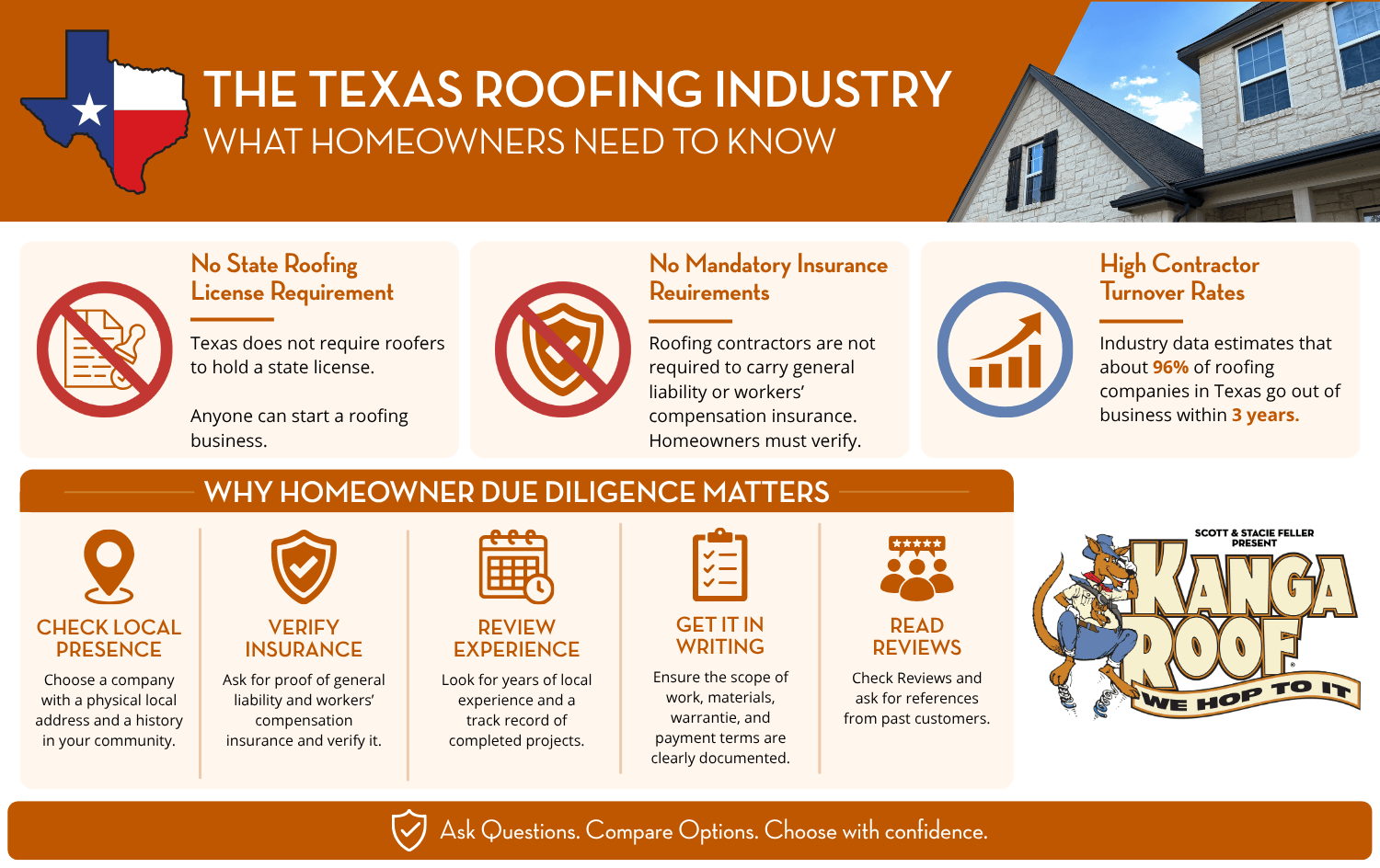
Unlike many trades, Texas does not require roofers to hold a state license. That means homeowners often have to sort through dozens of companies with little guidance on who is qualified, who is insured, and who will still be around if a problem arises years later.
At KangaRoof, we've helped Texas homeowners navigate roofing decisions for more than two decades. We've seen what separates reputable contractors from those who disappear after the job is finished.
In this guide, you'll learn how to evaluate roofing contractors in Round Rock and Central Texas, what red flags to watch for, what questions to ask, and how to make a confident hiring decision.
Why Choosing the Right Roofing Contractor Matters in Texas
Texas experiences some of the most severe weather in the country.
Hailstorms, high winds, and heavy rain create constant demand for roofing services. Unfortunately, they also attract contractors looking to capitalize on storm damage opportunities.
One of the biggest challenges for homeowners is that Texas has very few requirements for roofing contractors.
There is:
- No state roofing license requirement
- No mandatory roofing training
- No requirement for roofing contractors to carry insurance
As a result, almost anyone can start a roofing company.
When homeowners choose the wrong contractor, the consequences can include:
- Poor workmanship
- Insurance claim complications
- Unanswered warranty requests
- Companies that close their doors shortly after completing the project
Industry estimates suggest that a large percentage of roofing companies do not remain in business long term.
That's why selecting the right contractor is just as important as selecting the right roofing materials.
Is the Roofing Company Actually Local?
One of the first questions homeowners should ask is whether the contractor is truly local.
A local roofing company is more likely to:
- Understand Central Texas weather patterns
- Know local building requirements
- Pull permits correctly when necessary
- Be available if warranty issues arise later
After major storms, temporary contractors often move into affected neighborhoods. They may complete projects quickly and leave the area shortly afterward.
If problems develop months later, homeowners may struggle to reach them.
When evaluating a contractor, look for:
- A physical office in the Austin or Round Rock area
- Consistent local branding
- Established online reviews
- A documented history serving Central Texas homeowners
A company that plans to stay in the community has a strong incentive to protect its reputation.
Does the Roofing Contractor Carry Insurance?
Because Texas does not require roofing contractors to carry insurance, homeowners should verify coverage themselves.
At a minimum, ask for proof of:
- General liability insurance
- Workers' compensation insurance
Without proper insurance coverage, homeowners may face additional risk if:
- Property damage occurs during installation
- A worker is injured on the job
- A subcontractor causes damage to the home
Professional contractors should be able to provide documentation quickly.
If a contractor avoids the conversation or refuses to provide proof of insurance, consider it a warning sign.
How Long Has the Roofing Company Been in Business?
Longevity matters because warranties only have value if the company honoring them still exists.
Many contractors advertise long workmanship warranties, but homeowners should also ask:
- How long has the company operated locally?
- Do they have a permanent office?
- What is their track record in Central Texas?
Established companies often have:
- More experienced crews
- Better installation systems
- Strong supplier relationships
- Greater accountability to local homeowners
A company that has successfully served the community for years has already demonstrated its ability to stand behind its work.
Does the Contractor Explain the Roofing Process Clearly?
A trustworthy contractor should help you understand your options, not pressure you into a decision.
That includes explaining:
- Whether repair or replacement makes the most sense
- What caused the damage
- What insurance may or may not cover
- Which materials are being installed
- How ventilation affects roof performance
- What the project timeline looks like
If you're unsure whether your roof needs a repair or a full replacement, our guide on Roof Repair vs. Roof Replacement can help you understand the factors contractors use to make that recommendation.
If every conversation immediately turns into a roof replacement recommendation without discussing alternatives, take a step back and ask more questions.
Good roofing companies focus on education before sales.
What Are the Biggest Red Flags When Hiring a Roofer in Texas?
Certain warning signs appear repeatedly after major storm events.
Recognizing them early can help homeowners avoid costly mistakes.
Extremely Low Estimates
If one estimate is dramatically lower than the others, there is usually a reason.
Low-priced proposals often exclude important components such as:
- Underlayment upgrades
- Flashing replacement
- Ventilation improvements
- Cleanup and disposal
- Water barrier protection
In some cases, unusually low pricing may also indicate:
- Inexperienced labor
- Lower-quality materials
- Installation shortcuts
A roofing system is more than just shingles. Every component contributes to performance and longevity.
High-Pressure Sales Tactics
Be cautious if you hear statements such as:
- "You need to sign today."
- "Insurance will buy you a free roof."
- "We're already working in the neighborhood."
- "This price disappears tomorrow."
Professional contractors understand that homeowners need time to review:
- Estimates
- Warranty information
- Material options
- Insurance documentation
You should never feel pressured into making a major home improvement decision.
Vague Contracts
A roofing proposal should clearly outline:
- Materials being installed
- Scope of work
- Warranty information
- Cleanup responsibilities
- Payment terms
- Ventilation upgrades
- Insurance supplement procedures when applicable
If important details seem missing, ask for clarification before signing.
Why Do Manufacturer Certifications Matter?
Many roofing manufacturers certify only a small percentage of contractors.
Manufacturers such as:
- GAF
- Owens Corning
- CertainTeed
Often require contractors to meet standards related to:
- Installation quality
- Business reputation
- Ongoing training
- Warranty compliance
These certifications may allow contractors to offer stronger manufacturer-backed warranties.
While certifications alone do not guarantee quality, they often indicate a commitment to professional standards and continuing education.
Should You Get Multiple Roofing Estimates?
Yes.
Most homeowners should obtain at least two or three estimates before making a decision.
Multiple estimates help you:
- Compare pricing fairly
- Understand the recommended scope of work
- Evaluate repair versus replacement recommendations
- Identify inconsistencies between contractors
You may discover that:
- One contractor recommends repairs
- Another recommends replacement
- One includes ventilation improvements
- Another leaves out important system components
The goal is not simply finding the lowest price.
The goal is understanding what your roof actually needs.
The Right Contractor Should Make the Decision Easier
Finding a roofing contractor in Round Rock should not come down to who offers the lowest price or the fastest promise.
The best contractors communicate clearly, explain your options honestly, install roofing systems correctly, and stand behind their work long after the project is complete.
Because Texas has few regulations governing roofing contractors, homeowners must take a more active role in evaluating whom they hire.
The good news is that asking the right questions can quickly separate reputable companies from risky ones.
Need Answers About Your Roof?
If you're dealing with storm damage, aging shingles, or questions about whether your roof needs repairs or replacement, start with an inspection and clear information.
At KangaRoof, we help homeowners throughout Round Rock and Central Texas understand the condition of their roof, review their options, and make informed decisions without pressure.
Schedule an inspection and get the facts you need to move forward with confidence.

Related reading
Topics: