
Why Are My Gutters Overflowing in Heavy Rain? Causes and Fixes
October 29th, 2026
4 min read
Key Takeaways
- Most overflowing gutters are caused by clogs, sagging sections, gutters that are too small for the roof, or downspouts that can't keep up.
- Clean gutters can still overflow because of roof valleys, too few downspouts, the wrong slope, or blocked downspout elbows.
- Overflow can lead to fascia rot, soil erosion, stained siding, and water near your foundation.
- You can spot most warning signs from the ground. Leave ladders and roof work to a pro.
- Cleaning fixes clogs. Guards cut down on cleaning. Sagging, cracked, or undersized gutters usually need replacing.
Gutters overflow when more water reaches them than they can carry to the downspouts, usually because of clogs, sagging, too few or too small downspouts, or gutters that are too small for your roof.
KangaRoof has been serving homeowners since 1992, and we check gutters and downspouts on every roof inspection we do, so we see the same few causes over and over.
In this post, we'll walk through why gutters overflow (even clean ones), what you can safely check from the ground, and when the fix is cleaning, a gutter guard, or new gutters.
Why are my gutters overflowing when it rains hard?
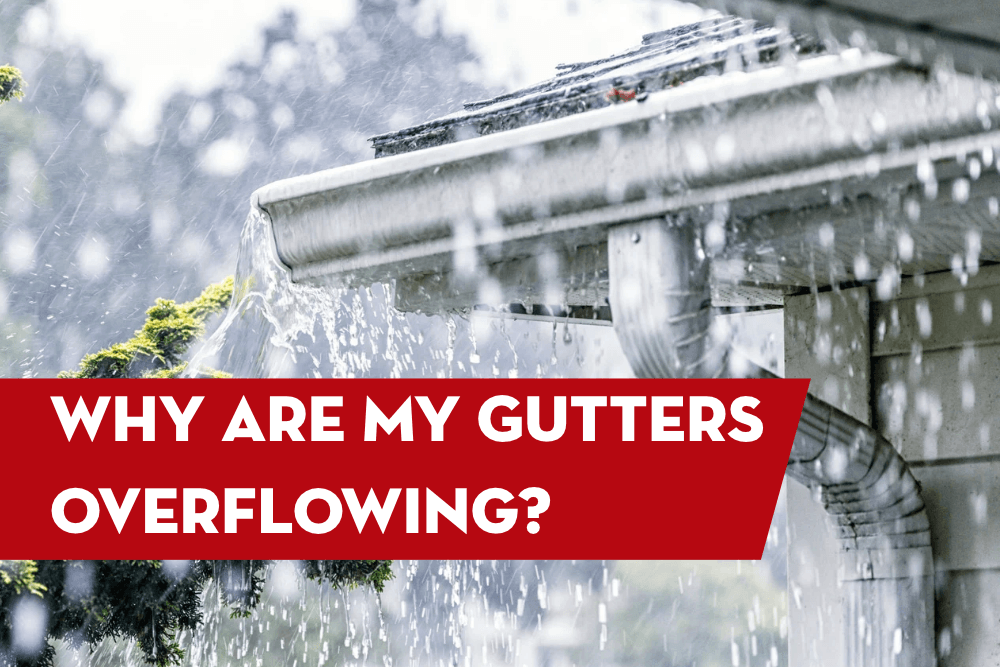
Your gutters overflow when more water reaches them than they can carry to the downspouts. That usually happens because something is blocking the flow or because the system is too small for the amount of water coming off your roof.
Austin often gets sudden, heavy downpours, and a gutter that handles a light shower can get overwhelmed, especially if it is partly clogged.
Common causes: clogs, undersized gutters, sagging, and downspouts that can't keep up
Here are the usual suspects we see:
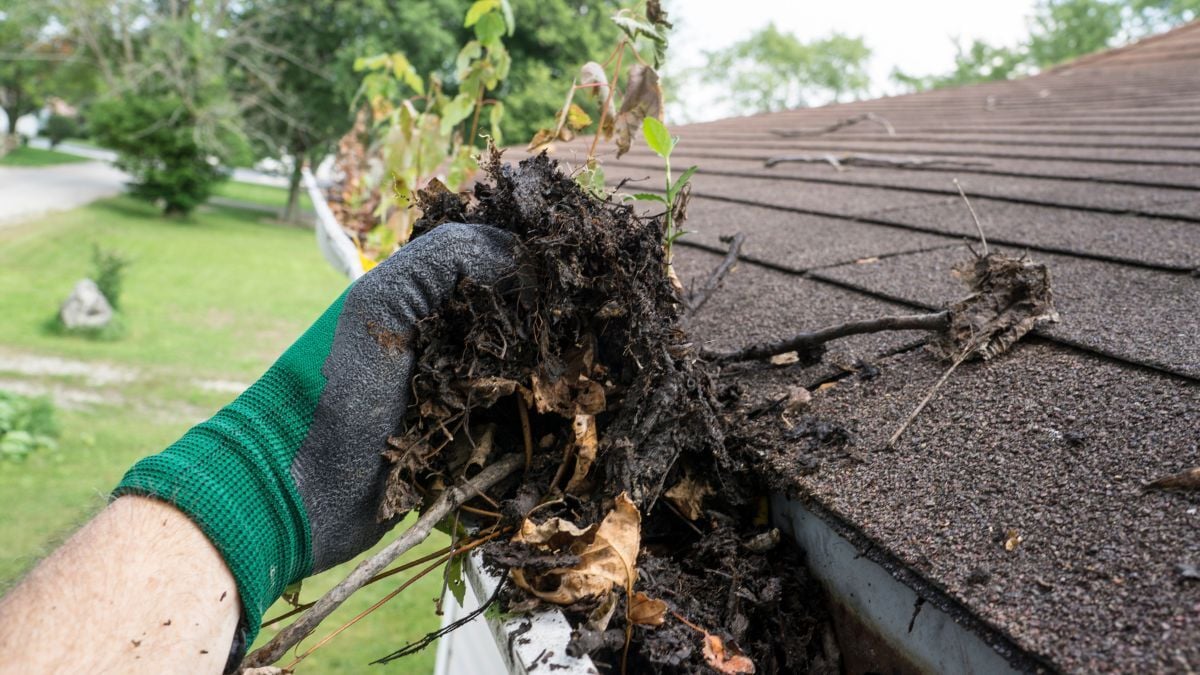
- Clogs. Leaves, oak pollen, pine needles, and pecan and cedar debris build up. Once water can't get into the downspout, it goes over the edge.
- Sagging sections. When a gutter pulls away from the house or dips in the middle, water collects in the low spot instead of flowing to the downspout. Sagging often means the gutter is carrying too much weight from water and debris, or its hangers and brackets have loosened.
- Undersized gutters. Some homes, especially those with large or steep roof sections, shed more water than standard gutters can handle in a hard rain. Oversized gutters and larger downspouts are one way to handle that.
- Downspouts that can't keep up. If you see water pooling near the house, it often means a downspout is blocked or undersized.
- Wear and damage. Cracks, holes, rust, and separated seams let water escape.
Why do my gutters overflow even when they're clean?
If your gutters are clear and still spill over, the problem is usually how water moves through the system, not debris. Common reasons:
- Roof valleys. A valley is where two roof slopes meet. It funnels a rush of water to one spot on the gutter, which can spill over there first.
- Too few downspouts. A long run of gutter with one downspout may not drain fast enough in a downpour.
- Wrong slope. Gutters need a slight tilt toward the downspout. If they're level or tilted the wrong way, water sits and spills.
- Water shooting past the gutter. On steep or metal roofs, fast-moving water can overshoot the gutter entirely.
- Blocked elbows. The bends inside a downspout can clog even when the gutter itself looks clean.
What overflowing water can do to fascia, foundations, and roof edges
Spillover once in a while is not a crisis. When it happens every rain, water ends up where it shouldn't:
- Fascia. The fascia is the board along your roof edge that the gutters attach to. Water spilling over it again and again can cause it to rot.
- Siding and paint. Overflow can stain siding and cause paint to peel, crack, or bubble.
- Soil and foundation. Water dumping straight down next to the house can wash away soil and lead to foundation movement.
- Roof edge. Water that backs up can sit along the drip edge (the metal strip at the very edge of the roof) and the soffit (the underside of the roof overhang).
What you can check safely from the ground
You can spot most warning signs from the ground. You can leave ladders and roof work to others.
- Watch your gutters during a rain from a window or a covered porch. Note exactly where the water spills over, and whether it's near a valley or a corner.
- Look for gutters that sag, dip, or pull away from the house, especially at the seams.
- Look for stains on the fascia or siding, and peeling paint near the gutter line.
- Check whether each downspout releases water several feet from the home. Look for puddles or washed-out soil near the foundation.
- Look for rust or orange streaks on the gutters or siding.
A few photos help a roofer understand the problem quickly.
When to clean, add guards, or replace your gutters
Clean them if the gutters are in good shape and the overflow is coming from clogs. Most Texas homeowners should clean their gutters at least twice a year, typically in the spring and fall, and many Austin homes with oak, cedar, or pecan trees need it more often. Our gutter maintenance tips cover the upkeep side in detail.
Add gutter guards if clogs keep coming back. Guards can help reduce debris buildup from leaves, oak pollen, and pine needles. They don't eliminate maintenance completely, but they can cut down on how often you need to clean. Micro mesh guards work well in years with heavy tree cover.
Replace them if the gutters are sagging, cracked, rusted, or pulling away, or if clean gutters still overflow because they're too small. Most professionally installed aluminum gutters last around 20 years with proper maintenance.
KangaRoof installs seamless gutters, gutter guards, and oversized downspouts. Read more about the signs you need new gutters, and if you're at that stage, here's what new gutters cost in Austin.
Want a second set of eyes?
If your gutters keep overflowing and you're not sure why, we're happy to take a look. Our free roof inspection includes your gutters and downspouts, with photos and a written summary you keep, and no obligation to hire us. learn more about our gutters, or contact KangaRoof to set up a visit.
Topics: