

Gutter Replacement in Austin: What Drives the Cost
September 21st, 2026
6 min read
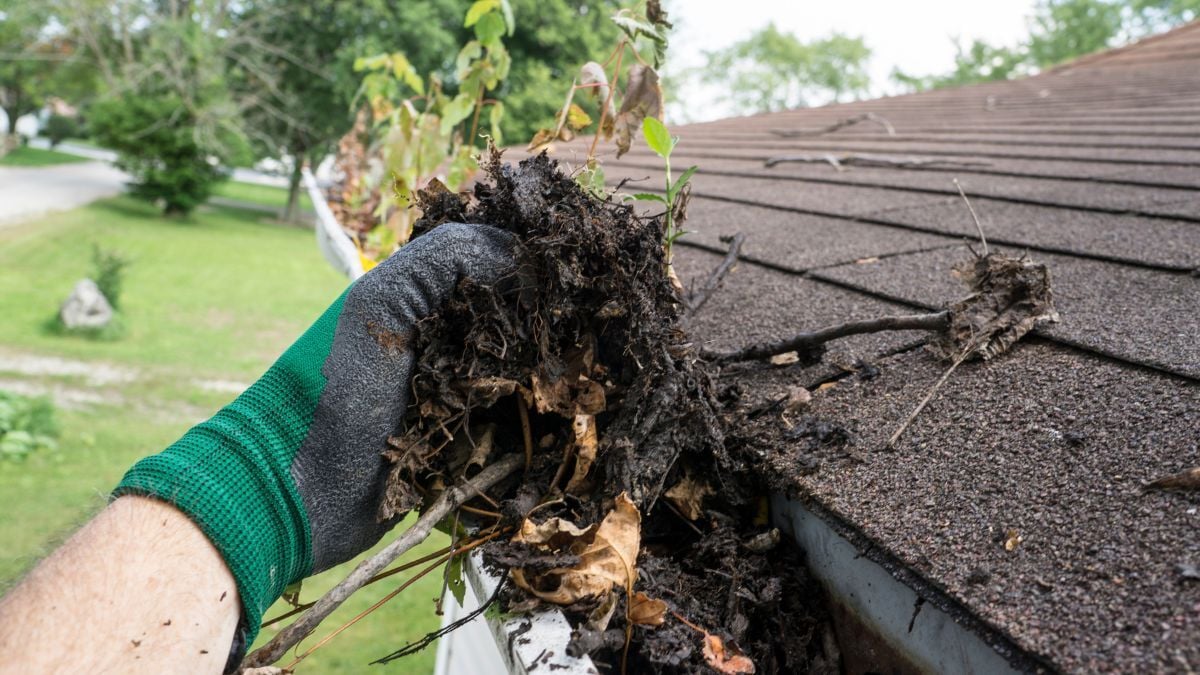
Gutter replacement cost in Austin and Central Texas comes down to linear feet, the number of stories, how many corners and downspouts the house needs, whether you add guards, and how much fascia board has rotted behind the old gutters. Seamless aluminum is the standard choice for most homes from Round Rock to Kyle, and it costs less than steel or copper while lasting decades if it is sized and pitched correctly. KangaRoof does not publish a flat per-foot price because two houses with the same footprint can need very different systems, so every gutter job is quoted after a free inspection, and the quoted price is guaranteed. Here is what drives that quote and what you should expect from a gutter system built for Texas rain.
Signs your gutters need replacing, not just cleaning
Gutters fail quietly. The first sign is usually not the gutter itself but what it stops protecting: a stained fascia board, mulch washed out of a flower bed, a puddle at the base of the slab after every storm, or a streak of dirt down the siding under a seam. Look for these:
- Sagging or pulling away from the fascia. Spikes have worked loose or the fascia behind them has rotted and no longer holds a fastener.
- Seams that drip or have separated. Sectional gutters leak at the joints first. Sealant fails in our heat within a few years.
- Standing water inside the gutter a day after rain. The run is pitched wrong or has sagged, and the water never reaches the downspout.
- Rust, holes or split metal. Steel gutters rust through; old aluminum splits at the corners.
- Water pouring over the front edge in a normal storm. The gutters are clogged, undersized, or both.
- Peeling paint, soft wood or dark stains on the fascia and soffit. Water has been getting behind the gutter.
Our article on five telltale signs you need new gutters walks through each one with what to look for from the ground. If two or more apply across most of the house, replacement usually costs less over time than repeated patching.
Gutter materials: seamless aluminum vs sectional, steel and copper
Seamless aluminum
Seamless gutters are formed on site from a coil of aluminum, run through a machine on a trailer, and cut to the exact length of each roof edge. The only joints are at the corners and downspout outlets, which is why they leak far less than sectional gutters. Aluminum does not rust, comes in dozens of baked-on colors to match trim, and is light enough to hang on standard fascia. This is the right choice for most Central Texas homes and the system KangaRoof installs most often.
Sectional gutters
Sold in ten-foot lengths at home centers, joined with slip connectors and sealant. They cost less in materials and can be installed by a homeowner, but every joint is a future leak, and in Texas heat the sealant does not last. Most of the failed gutters we replace are sectional.
Steel
Galvanized steel is stronger than aluminum and holds up better under ladders and heavy debris, but it will rust once the coating is scratched, and it is heavier and more expensive to install. It makes sense on some commercial buildings and rarely on a house.
Copper
Copper is the premium option: beautiful, extremely long lasting, and priced accordingly. It suits historic homes in Old Town Georgetown, Tarrytown or Hyde Park where the look matters. For a typical 2000s-era home in Avery Ranch or Falcon Pointe it is hard to justify the cost.
5-inch vs 6-inch gutters for Texas downpours
Central Texas does not get gentle rain. We get an inch in twenty minutes, and a gutter that cannot move that volume overflows at the low corners and dumps water right against the foundation. Five-inch K-style gutters are the residential default and handle most single-story homes with simple roofs. Six-inch gutters carry noticeably more water and pair with larger downspouts. Go with 6-inch when:
- The roof is steep, so water reaches the gutter faster.
- Large roof planes drain to a single run or a single downspout.
- The home is two stories with upper roofs draining onto lower ones.
- The gutters already overflow in ordinary storms.
- The roof is metal, which sheds water faster than shingles.
The cost difference between 5-inch and 6-inch is modest relative to the whole job, and on a roof that dumps a lot of water it is the single best upgrade you can make.
Gutter guards: worth it in Central Texas?
Gutter guards keep leaves, live oak tassels and roofing granules out of the trough so water keeps moving. Whether they pay off depends on your trees. A home in Circle C, Great Hills or the Hill Country side of Dripping Springs, surrounded by live oaks that drop tassels every spring and leaves all year, will fill an unguarded gutter several times a season. A newer subdivision in Hutto or Kyle with young trees may not need them yet.
Guards come in several types: micro-mesh screens, perforated metal covers, reverse-curve covers, and foam or brush inserts. Micro-mesh and perforated metal do the best job against small debris and hold up in our heat. Foam and brush inserts are cheap but trap seeds and need replacing. No guard eliminates maintenance entirely, but a good one turns a twice-a-year climb into an occasional rinse from the ground. Guards add to the quote, and we price them per foot as an option so you can decide by section: guards on the runs under the oaks, none on the runs that stay clean.
Downspouts, drainage, clay soil and slab foundations
This is the part of a gutter job that homeowners underrate and that matters most in Central Texas. Nearly every house here sits on a concrete slab over expansive clay soil. Clay swells when wet and shrinks when dry, and when one corner of a slab stays wetter than the rest, the foundation moves unevenly. Cracked drywall, sticking doors and separated brick lines often trace back to a downspout dumping water at one corner.
A good gutter system moves water away from the slab, not just off the roof. That means:
- Enough downspouts that no single run carries more than it can handle.
- Extensions, splash blocks or buried drain lines that carry water several feet from the foundation.
- Downspouts placed where the grade slopes away from the house, not toward a neighbor's fence or a low spot.
- Proper pitch on every run so water reaches the outlet instead of sitting.
When we quote a replacement we look at where the water goes after it leaves the downspout, and we will tell you if a downspout needs to move.
What drives gutter replacement cost
Every quote is built from the same inputs. Knowing them lets you compare bids honestly.
- Linear feet. The total length of gutter around the roof edge. The biggest factor.
- Stories. Second-story gutters need taller ladders or lifts and more time per foot.
- Corners. Each inside or outside corner is a hand-mitered joint. A simple rectangle has four; a home with bays, dormers and a wraparound porch may have fifteen.
- Downspouts. Number, size, and whether they need extensions or tie into drain lines.
- Gutter size and material. 6-inch over 5-inch, and aluminum vs steel or copper.
- Guards. Optional, priced per foot by type.
- Fascia repair. Rotted fascia behind old gutters must be replaced before new gutters can be hung. This is common on homes where sectional gutters leaked at the seams for years, and it is the most frequent surprise on a gutter job. Our inspection checks the fascia along every run so it is in the quote, not added later.
- Removal and disposal of the old system.
KangaRoof quotes gutters the same way we quote roofs: a free inspection, a written scope, and a guaranteed price. The number does not grow once the crew arrives. See our gutter installation and repair page for what a job includes.
Replacing gutters with a roof replacement
If your roof is due, replace the gutters at the same time. The crew has to remove or work around the gutters during tear-off anyway, the drip edge and gutter apron get installed together so water cannot get behind the gutter, and new gutters on a new roof are pitched to the new roof edge instead of an old one. It also means one inspection, one guaranteed quote and one crew visit instead of two. Ask for a combined quote if your shingles are within a few years of the end of their life. A gutter system installed on a roof that gets replaced two years later often has to be removed and rehung, which you pay for twice.
Maintenance: keeping the new system working
New gutters still need attention. Twice a year, and after any big wind event, check that the troughs are clear, the downspouts run freely, and the extensions are still in place. Watch the fascia for stains after storms. If you have guards, rinse the surface so seeds and granules do not build up. Our gutter maintenance tips cover the full checklist. If you would rather not climb a ladder, KangaRoof's Overhead Care Club is a roof and gutter maintenance membership that puts the inspection and cleaning on our calendar instead of yours.
FAQ
How much does gutter replacement cost in Austin?
It depends on linear feet, number of stories, corners, downspouts, gutter size, material, guards, and whether the fascia behind the old gutters needs repair. Seamless aluminum is the most affordable long-lasting option, with steel and copper costing more. KangaRoof quotes gutter replacement as a guaranteed price after a free inspection.
Are seamless gutters worth the extra cost over sectional?
Yes for almost every home. Seamless gutters have joints only at the corners and outlets, so they leak far less and last longer than sectional gutters whose sealed seams fail in Texas heat. Most of the gutters we replace are failed sectional systems.
Should I get 5-inch or 6-inch gutters in Central Texas?
Five-inch gutters handle most single-story homes with simple roofs. Choose 6-inch for steep roofs, large roof planes draining to one run, two-story homes, metal roofs, or any house whose gutters already overflow in normal storms. The cost difference is modest.
Are gutter guards worth it?
If your home is under live oaks or other heavy shedding trees, yes. Micro-mesh and perforated metal guards keep most debris out and hold up in the heat. Homes with few trees may not need them. We price guards per foot so you can add them only on the runs that need them.
Should I replace gutters when I replace my roof?
Usually, if the gutters are more than a few years old or showing any failure signs. Doing both at once means the drip edge and gutters are installed together, the gutters are pitched to the new roof edge, and you pay for one crew visit instead of two.
Ready to see what new seamless gutters would cost on your home? Call KangaRoof at (512) 388-7663 for a free inspection with photos and a written summary, or reach us through our contact page, and you will get a guaranteed price before any work starts.
Related reading
Written and published by KangaRoof, the Round Rock roofing company founded as Feller Roofing in 1992.
