
Roof Leak Repair in Central Texas: What Drives the Price
September 21st, 2026
7 min read
Roof leak repair cost in Central Texas depends on five things: where the leak is coming from, how hard the spot is to reach, what your roof is made of, how much decking and insulation the water has already ruined, and whether the roof is worth repairing at all. A small flashing or pipe boot repair costs a fraction of a replacement, while a leak that has been running for months through rotted decking on a steep two-story roof costs far more. KangaRoof quotes every leak repair as a guaranteed price after a free inspection, so you know the number before anyone climbs a ladder, and that number does not change.
First, stop the damage inside
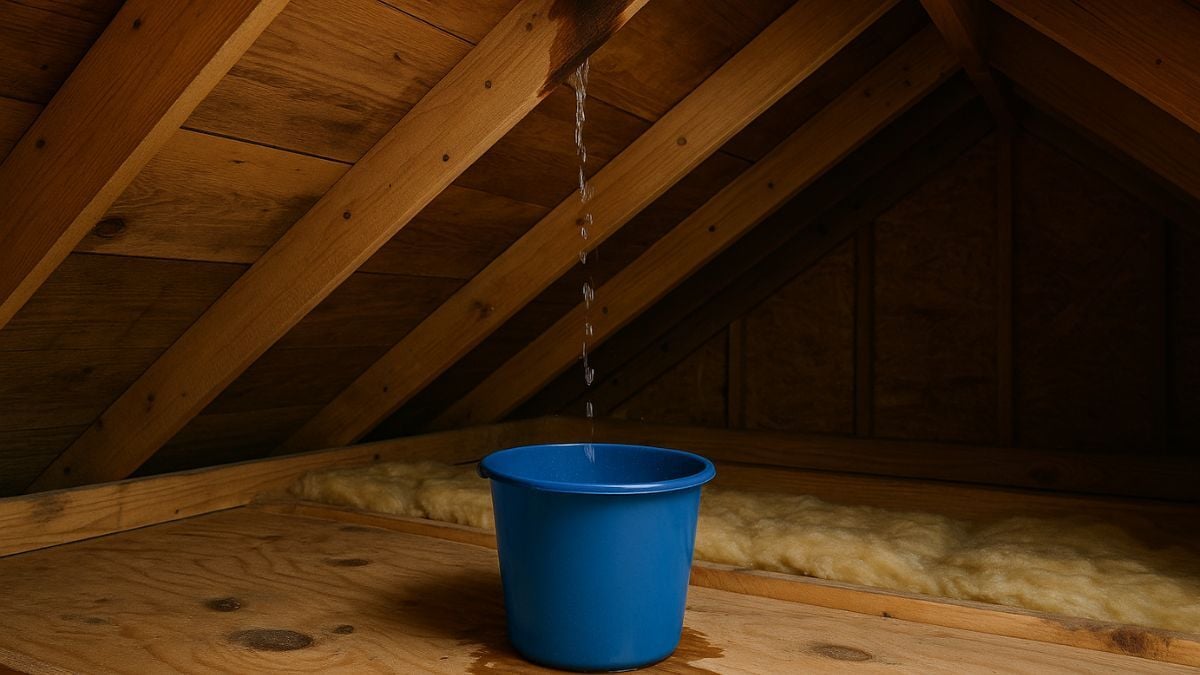
Before you think about cost, contain the water. Move furniture and electronics away from the drip, put a bucket under it, and if the ceiling drywall is bulging with water, poke a small hole in the center of the bulge to let it drain into the bucket instead of collapsing across the room. Take photos of everything: the ceiling stain, the drip, any wet insulation you can see in the attic. Those photos matter later if insurance is involved. Do not go on the roof in the rain. Our step-by-step guide on what to do if your roof starts leaking covers the full sequence, including how to find the entry point from inside the attic.
Where Texas roofs actually leak
Across decades of inspections in Round Rock, Austin, Georgetown, Pflugerville and the rest of Central Texas, the same handful of leak sources show up over and over. Knowing them helps you understand the quote you get.
- Pipe boots. The rubber collar around plumbing vent pipes cracks in our heat, often years before the shingles wear out. This is the single most common leak on a 2000s-era home and one of the cheapest to fix.
- Flashing. The metal where the roof meets a wall, a chimney, a dormer or a skylight. Flashing pulls away, rusts, or was never sealed properly in the first place.
- Valleys. Where two roof planes meet, water concentrates. Worn shingles, debris dams or an open valley with damaged metal lets water under the surface.
- Skylights. Failed seals, cracked curbs, and flashing that was installed by a window crew instead of a roofer.
- Hail bruising. Hail knocks granules loose and bruises the shingle mat. The leak often shows up a year or two after the storm, when the bruised spot finally cracks through.
- Nail pops. A nail that backs out lifts the shingle above it and leaves a hole in the one below. Common on roofs installed fast during a post-storm rush.
- Chimneys. Cracked mortar caps, missing counter-flashing, and saddle areas behind the chimney that collect water and leaves.
Wind-lifted shingles, exposed nail heads on ridge caps, and clogged gutters that back water under the first course of shingles round out the list.
Why the leak is rarely where the stain is
Water enters the roof at one spot, then runs along the underlayment, a rafter, or the top of the decking until it finds a place to drop. On a typical 6/12 pitch roof, the entry point can be several feet uphill from the ceiling stain, and on a roof with a valley it may be on a different plane entirely. That is why a handyman who caulks the shingle directly above the stain usually does not fix the leak. A proper inspection starts in the attic with a flashlight, traces the water trail uphill to its source, then confirms from the roof surface. It takes longer, and it is the only way to quote a repair that actually works.
What determines the cost of a roof leak repair
Access and pitch
A walkable single-story roof is quick to work on. A steep pitch requires harnesses, roof jacks and more crew time. Two-story homes add ladder setup and material hauling. The same pipe boot repair costs more on a steep two-story roof in Steiner Ranch than on a single-story ranch home in Round Rock West, simply because of the time and safety equipment involved.
Roofing material
Architectural asphalt shingles are the easiest and least expensive to repair, and they cover most Central Texas homes. Metal roofs need matching panels, specialty fasteners and sealants. Tile roofs require careful removal and replacement of surrounding tiles, and the tile itself may be hard to match. Flat and low-slope systems such as TPO and modified bitumen need heat welding or patching with compatible material. Material also affects how well a repair blends: a shingle patch on a ten-year-old roof will be visible from the street, even with the closest color match.
The extent of hidden damage
This is the biggest variable. A leak caught in the first week usually needs only the surface fix. A leak that has been running for months often means rotted decking, soaked insulation, mold on the underside of the sheathing, and stained or sagging drywall. Every sheet of decking that has to be cut out and replaced adds to the job, and that is only visible once the shingles come up. A thorough inspection can predict most of it from the attic side, which is how we give a guaranteed number instead of an open-ended estimate.
Repair or end of life?
If the roof is 20 years old, has already been patched in three places, and the shingles are brittle and losing granules everywhere, a repair is money spent on a roof that is about to be replaced anyway. Architectural asphalt typically lasts 20 to 30 years in Texas heat, often less. When we inspect a leak on a roof that is near the end, we say so, and we quote both options. Our guide to how much roof repair costs in Central Texas goes deeper into how age changes the decision.
Emergency timing
A leak during a storm at night needs a tarp first and a repair second. Emergency tarping is separate from the permanent repair, and it is covered below.
Guaranteed pricing vs hourly estimates
There are two ways roofers price leak repairs. The first is an estimate: a starting number, usually hourly plus materials, that grows once the crew gets on the roof and finds "more than we expected." The second is a guaranteed price: an inspector finds the source, checks the attic for hidden damage, writes up exactly what will be done, and gives you a number that is the number. KangaRoof works the second way. Our inspections are free, in person, with photos and a written summary, and the repair quote that comes out of that inspection is the price you pay. If our crew opens the roof and finds more rot than the inspection predicted, that is on us, not on you.
When you compare quotes, ask each roofer one question: is this a guaranteed price or an estimate? The answer tells you more than the number does.
When insurance covers a roof leak
Homeowners insurance in Texas generally covers sudden, accidental damage: a hail storm cracks the shingles, a windstorm peels back a section, a tree limb punctures the decking. It generally does not cover wear and tear: a pipe boot that dried out over twelve summers, flashing that rusted through, or a roof that simply reached the end of its life. Most leak repairs fall in the second category and are paid out of pocket. The exception is a leak that shows up after a storm, where the inspection ties the entry point to storm damage.
If the leak is storm related, remember that the homeowner files the claim, the roofer cannot legally waive or pay your deductible in Texas, and you get to choose your own roofer. KangaRoof documents the damage with photos, meets the adjuster on site, and handles the paperwork with you. Our insurance process page walks through every step. One more point: if a storm-related leak is large enough to trigger a claim, the fix is often a full replacement rather than a patch, because hail rarely hits one shingle.
Emergency roof leak repair and tarping
When water is coming in during a storm, the priority is to stop it, not to fix it. KangaRoof runs a 24/7 emergency roof repair service across Round Rock, Austin and the surrounding cities. An emergency visit means securing a tarp or temporary patch over the entry point so the interior damage stops growing, then scheduling the permanent repair once the roof is dry and safe to work on. Emergency tarping is quoted at the time of the call. A tarp installed within hours of a leak can be the difference between replacing a ceiling patch and replacing a room.
Repair or replace: how to decide
Most leaks on a roof under 15 years old with one identifiable source are repairs. Consider replacement instead when:
- The roof is within a few years of its typical lifespan and shingles are brittle or bald.
- There are multiple active leaks, or this is the third or fourth repair on the same roof.
- Storm damage is widespread and an insurance claim is likely to cover replacement.
- Decking rot is extensive enough that the repair would involve a large section of the roof anyway.
- You plan to sell soon and a new roof with a transferable warranty is worth more than a patched one.
If replacement is on the table, our Instant Roof Cost Calculator gives a starting number for your square footage. Per the calculator, asphalt shingle systems start around $350 per square installed and run to about $618 per square at the top tier, with steep and two-story roofs costing more. Compare that to the repair quote and the age of the roof, and the decision usually makes itself. Full details on what a repair visit includes are on our roof repair service page.
FAQ
How much does it cost to repair a roof leak in Central Texas?
It depends on the leak source, roof pitch and height, roofing material, and how much decking and insulation the water has damaged. A single pipe boot or flashing repair on a walkable asphalt roof is a fraction of the cost of a replacement, while a long-running leak with rotted decking on a steep two-story roof costs considerably more. KangaRoof quotes an exact, guaranteed price after a free inspection.
Does homeowners insurance cover a roof leak?
Usually only when the leak is caused by sudden storm damage such as hail, wind or a fallen limb. Leaks from age, worn pipe boots or failed flashing are considered maintenance and are paid out of pocket. An inspection that documents the cause is what determines which one you have.
Why is my ceiling stain not directly under the leak?
Water enters the roof at one point and travels along the underlayment, rafters or decking before it drips. The entry point is often several feet uphill from the stain, which is why tracing the leak from inside the attic is the only reliable way to find it.
Should I repair or replace a leaking roof?
Repair if the roof is relatively young and the leak has one clear source. Replace if the roof is near the end of its typical lifespan, has multiple leaks or repeated repairs, or has widespread storm damage that insurance may cover. A free inspection gives you a guaranteed price for both so you can compare.
What should I do about a roof leak in the middle of a storm?
Contain the water inside, photograph the damage, stay off the roof, and call for emergency tarping. KangaRoof offers 24/7 emergency roof repair across Central Texas to stop the leak until a permanent repair can be made safely.
If your ceiling is stained, dripping or bulging, call KangaRoof at (512) 388-7663 for a free roof inspection with photos and a written summary, and a guaranteed repair price before any work begins.
Related reading
Written and published by KangaRoof, the Round Rock roofing company founded as Feller Roofing in 1992.
Topics: