
Roof Inspection Checklist: What a Pro Looks For in Texas
September 21st, 2026
6 min read

A professional roof inspection checks every part of the roof system, not just the shingles: the surface, the flashing and penetrations, the drainage, the attic underneath, and the structure holding it all up. A good inspector in Central Texas also looks specifically for hail bruising and wind lift, because those are the two kinds of damage that lead to insurance claims here. Below is the same checklist KangaRoof works through on a Round Rock roof, plus what a written inspection report should contain, which checks you can safely do yourself from the ground, and when it is time to call a pro. If you want the short version: a KangaRoof roof inspection is free, in person, and comes with photos and a written summary.
Exterior roof inspection checklist
This is the part most people picture, and it is where the inspector spends most of the time. On an asphalt shingle roof, the walk covers every slope, every penetration, and every edge.
- Shingle condition. Cracking, curling, cupping, blistering, or brittleness. Shingles that break when lifted are near the end of their life.
- Granule loss. Bald patches where the dark mat shows through, and granule build-up in gutters and at downspout outlets. Granules are the shingle's UV protection, and Texas sun burns through them.
- Missing, loose, or slipped shingles. Especially along the edges and on slopes facing prevailing storm winds.
- Hail bruising. Soft, dark, dented spots where hail crushed the mat and knocked granules loose. Bruises are often invisible from the ground and only show up when you run a hand across the shingle. The inspector counts hits per test square on each slope, which is how adjusters evaluate hail claims.
- Wind lift. Tabs that have broken their adhesive seal and lift by hand, creased shingles, and shingles folded back on themselves. A roof that has lost its seal will keep losing shingles in every storm.
- Flashing. Metal at every wall-to-roof joint, step flashing along sidewalls, and kick-out flashing where a roof edge meets a wall. Rust, lifted edges, missing pieces, and reliance on caulk instead of metal are all problems.
- Pipe boots. The rubber collars around plumbing vents crack and split in the heat long before the shingles fail. This is the single most common leak source we find on Round Rock homes.
- Valleys. Where two slopes meet, water volume is highest. The inspector checks for worn shingles, debris dams, exposed or rusted valley metal, and nails placed too close to the centerline.
- Ridge and hip caps. Cracked or missing cap shingles, exposed nails, and worn ridge vent.
- Vents. Box vents, turbine vents, ridge vents and power fans. Dents from hail, rust, loose fasteners, and missing screens.
- Chimney. Flashing and counter-flashing, the cricket (the small diverter behind the chimney), mortar joints, and the cap. Chimneys leak more than almost any other feature.
- Skylights. Seals, flashing kits, cracked or fogged glazing, and the shingle work around the curb.
- Gutters and downspouts. Sagging, separation from the fascia, standing water, granule loads, and dents from hail. Whether the gutters actually drain away from the foundation.
- Fascia and soffit. Rot, peeling paint, water staining, and insect or animal entry. Soffit vents that are painted over or blocked.
- Drip edge. Present, properly lapped, and not rusted through.
- Exposed nails and sealant. Nail pops, nails driven through the shingle surface, and old caulk that has cracked in the sun.
- Debris, moss, and algae. Anything that holds moisture against the shingles.
- Collateral damage. Dents on soft metals like gutters, vents, AC fins, and window screens. These confirm hail size and direction and are a key part of claim documentation.
On a metal or tile roof the list changes: fastener condition, panel seams, sealant at laps, and underlayment condition on tile. The principles are the same. Every joint, every penetration, every edge.
Interior and attic inspection checklist
The attic tells you what the roof surface hides. This is the part homeowners skip and the part that most often changes the recommendation from repair to replacement.
- Water stains and streaks. On the underside of the decking, along rafters, and around penetrations. Fresh stains are dark and damp; old ones are dry rings. Both matter.
- Daylight. Any point of light coming through the decking, other than at a vent, is a hole.
- Decking condition. Soft, sagging, delaminated, or moldy plywood or OSB. Rotten decking must be replaced during a reroof and is not covered by every insurance scope unless documented.
- Insulation. Depth, coverage, and whether it is wet, compressed, or blocking the soffit vents.
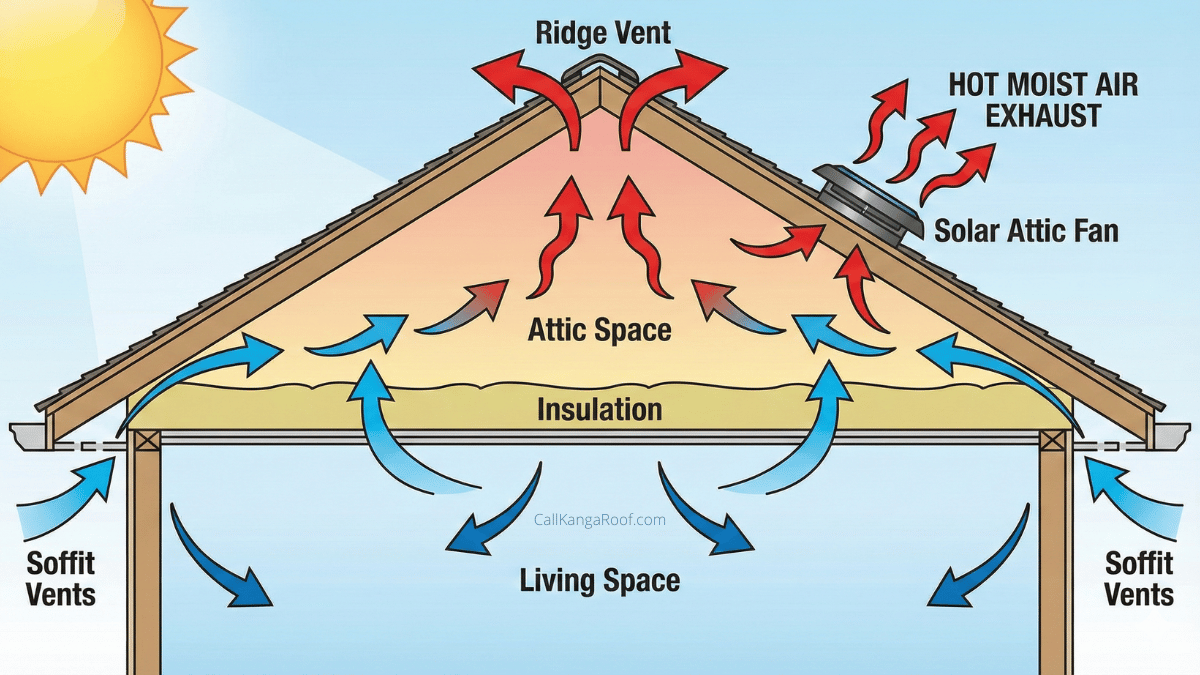
- Ventilation. Intake at the eaves, exhaust at the ridge, and airflow between them. An attic that is far hotter than the outside air on a summer afternoon is cooking the shingles from below. Our guide to how roof ventilation works explains what a balanced system looks like.
- Bath and kitchen fans. Whether they vent outside or just dump moist air into the attic.
- Framing. Cracked or sagging rafters, trusses that have been cut, and evidence of past repairs.
- Interior ceilings. Stains, bubbling paint, and soft drywall on the top floor, especially below valleys, chimneys, and bathrooms.
What a good roof inspection report contains
An inspection you cannot read later is only half an inspection. The written report is what you will hand to your insurance adjuster, your home buyer, or the next contractor. It should include:
- Photos of every problem found, labeled by location (which slope, which penetration).
- Overview photos of each slope so the roof's general condition is on record.
- A description of the roofing material, approximate age if known, and number of layers.
- A list of findings sorted by urgency: active leaks and safety issues first, then items to repair soon, then items to watch.
- For storm inspections, hail hit counts per test square on each slope and photos of collateral damage on soft metals.
- A clear recommendation: no action, repair, or replacement, with the reasoning.
- If repair or replacement is recommended, a written quote. At KangaRoof the quoted price is the price, not an estimate.
Keep every report. A file of dated inspections proves the roof was in good shape before a storm, which is exactly the question an adjuster asks when deciding whether damage is storm-related or wear and tear.
DIY checks you can do from the ground
You do not need to be on the roof to catch early warning signs. Twice a year, and after any big storm, walk the perimeter of the house and look for:
- Shingles in the yard or driveway, or tabs visibly lifted or missing.
- Granule piles at the bottom of downspouts.
- Dents in the gutters, downspouts, or the top of the AC unit after hail.
- Sagging along the ridge line or gutters pulling away from the house.
- Rust streaks or gaps at the chimney and around vent pipes.
- Stains on ceilings, and any musty smell in the attic.
Use binoculars for a closer look at flashing and valleys. Then stop there. Do not walk on your roof. Falls are the biggest safety risk in roofing, asphalt shingles are slick when hot or wet, and foot traffic on a sun-softened Texas roof scuffs granules off and can crack brittle shingles. Walking the roof can also void a manufacturer warranty. If something on the ground-level list looks off, that is the point to call a professional, not to fetch a ladder.
Hail inspections and insurance documentation
After a hailstorm, the inspection has a second job: building the record your insurance company will use. Central Texas hail season runs roughly March through June, with fall storms too. A storm inspection from KangaRoof includes the documentation an adjuster expects: test squares on each slope, photos of every bruise and every dented soft metal, and a written summary of the damage.
The order of operations matters. Get the inspection first, before you call your insurer, so you know whether the damage is real and whether it is worth more than your deductible. If it is, we can meet the adjuster at your house and walk the roof with them so nothing gets missed. Our storm and hail damage page covers what to look for after a storm, and our insurance process page walks through the claim from filing to final payment. One rule to remember: in Texas you choose your roofer, and no roofer can legally waive or pay your deductible.
How often should a roof be inspected?
For a Central Texas home, once a year is the baseline, and after every significant hail or wind event on top of that. Roofs older than 15 years and roofs with a history of leaks benefit from a look every spring and fall. You should also get an inspection before buying or selling a house, before installing solar or a satellite dish, and any time you notice one of the ground-level warning signs above. Because KangaRoof inspections are free, there is no reason to guess. Members of our Overhead Care Club get scheduled inspections and gutter maintenance as part of the program, which keeps the report file current without anyone having to remember.
FAQ
What does a roof inspection include?
A full inspection covers the roof surface (shingles, flashing, penetrations, valleys, vents, chimney, skylights), the drainage (gutters, downspouts, fascia, soffit), and the attic (decking, insulation, ventilation, stains). It ends with photos and a written report that says what was found and what to do about it.
How much does a roof inspection cost?
KangaRoof roof inspections are free, in person, with photos and a written summary. Some companies charge for inspections, especially real estate inspections, so ask before scheduling.
How long does a roof inspection take?
Most residential inspections take under an hour, depending on the size of the roof, its pitch, and how much attic access there is. A storm inspection with test squares and full photo documentation can take a little longer.
Can I inspect my own roof?
You can and should do the ground-level checks: looking for lifted shingles, granule piles, dented gutters, and ceiling stains. Do not climb onto the roof. It is dangerous, it can damage the shingles, and it can void a warranty. Leave the walk to a professional with the right footwear and fall protection.
Should I get a roof inspection before filing an insurance claim?
Yes. An inspection tells you whether there is storm damage, whether it exceeds your deductible, and gives you the photos and hit counts the adjuster will want to see. Filing without that information risks a denied claim on your record for damage that was never worth claiming.
Ready to know exactly what shape your roof is in? Call KangaRoof at (512) 388-7663 or contact us online to schedule a free inspection with photos and a written report.
Related reading
Written and published by KangaRoof, the Round Rock roofing company founded as Feller Roofing in 1992.
Topics: