

Metal Roof Cost in Texas (2026): Per Sq Ft and vs Asphalt
September 21st, 2026
7 min read
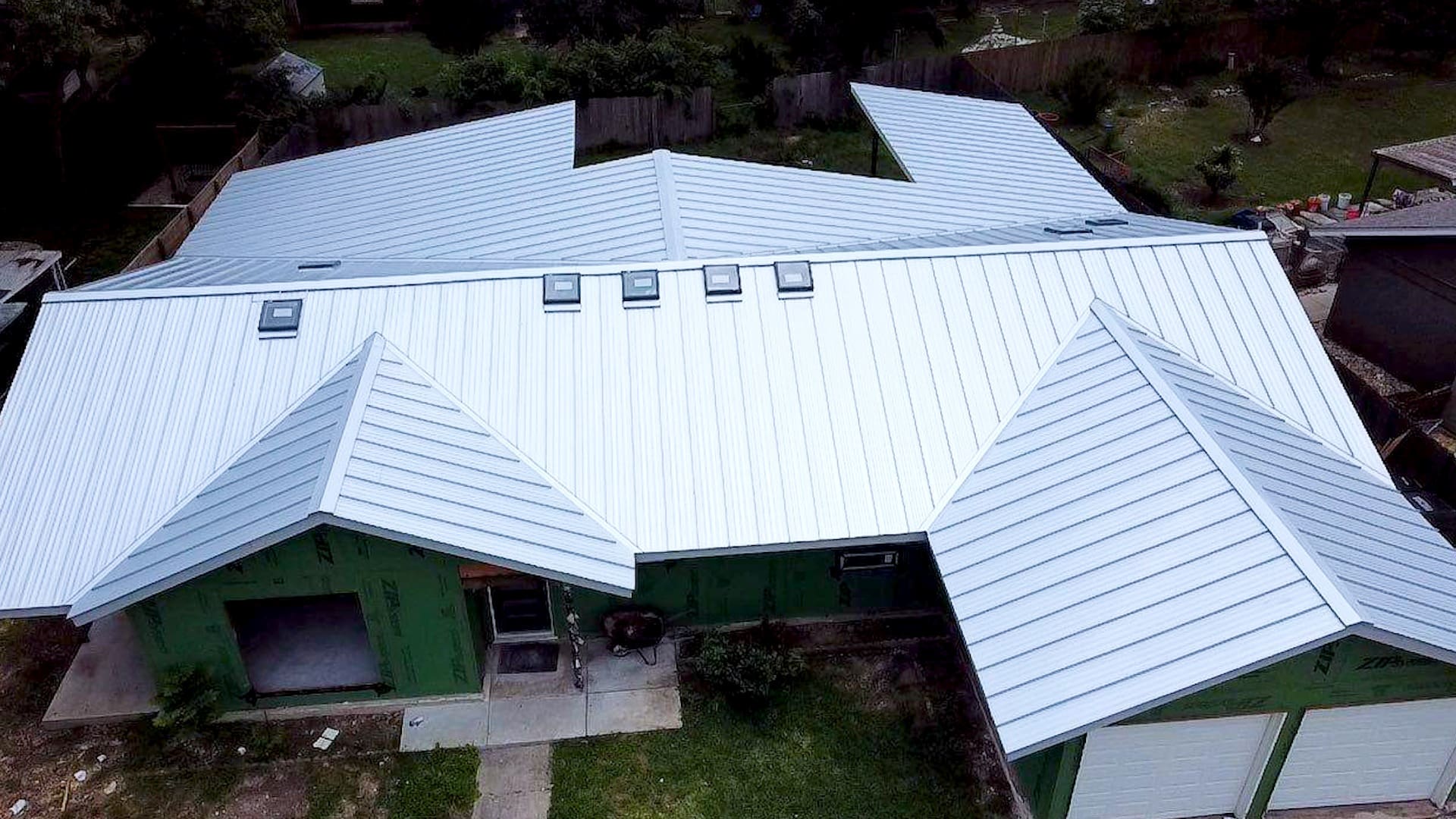
Per our Instant Roof Cost Calculator, a metal roof in Central Texas starts around $1,150 to $1,470 per square installed, which is $11.50 to $14.70 per square foot of roof. One square is 100 square feet. On a 2,000 square foot roof (20 squares), that is about $23,000 to $29,400 for metal, compared with $7,000 to $12,360 for asphalt shingles from the same calculator. Metal costs roughly two to four times what shingles cost up front, and typically lasts 40 to 60 years against 20 to 30 for architectural asphalt in Texas heat. This guide covers the per-square-foot math, worked examples for 1,500, 2,000 and 2,500 square foot roofs, the difference between standing seam, exposed-fastener, metal shingle and stone-coated steel, and when metal is not worth the money.
Metal roof cost per square foot in Texas
Roofers price in squares, and one square is 100 square feet of roof surface. To convert the calculator's per-square pricing to per-square-foot pricing, divide by 100.
- Metal roofing: starting around $1,150 to $1,470 per square installed, or $11.50 to $14.70 per square foot.
- Asphalt shingles, for comparison: starting around $350 to $618 per square installed, or $3.50 to $6.18 per square foot.
- Steep-pitch and two-story homes: priced above those ranges. Metal panels are long and awkward to handle, so height and pitch matter even more than they do with shingles.
Those ranges cover the standing seam and metal shingle systems KangaRoof installs on standard-pitch, single-story homes. Other metal styles and complicated rooflines are quoted after a free inspection.
Worked examples: 1,500, 2,000 and 2,500 square foot roofs
One thing to get straight first: these are roof square footage, not house square footage. Your roof is larger than the footprint under it because it slopes and overhangs the walls. If your house is 1,500 square feet on one level, the roof is bigger than 1,500 square feet. If it is a two-story 2,500 square foot house, the roof might be close to 1,500 square feet but priced at the two-story rate. Our calculator handles that conversion from your home's size, pitch, and story count.
1,500 square foot metal roof cost (15 squares)
- Metal: 15 x $1,150 = $17,250, up to 15 x $1,470 = $22,050.
- Asphalt for comparison: 15 x $350 = $5,250, up to 15 x $618 = $9,270.
2,000 square foot metal roof cost (20 squares)
- Metal: 20 x $1,150 = $23,000, up to 20 x $1,470 = $29,400.
- Asphalt for comparison: 20 x $350 = $7,000, up to 20 x $618 = $12,360.
2,500 square foot metal roof cost (25 squares)
- Metal: 25 x $1,150 = $28,750, up to 25 x $1,470 = $36,750.
- Asphalt for comparison: 25 x $350 = $8,750, up to 25 x $618 = $15,450.
On the 20-square example, the gap between the top asphalt tier ($12,360) and the entry metal tier ($23,000) is $10,640. That is the real decision most Central Texas homeowners face: the best shingle roof on the market, or the entry point of a metal roof for about $10,600 more on a roof that size.
Metal roof vs shingles cost over the life of the roof
Up front, shingles win every time. Over 50 years, the picture changes. Architectural asphalt shingles typically last 20 to 30 years, and Texas heat often pushes that toward the low end. Metal roofs typically last 40 to 60 years. So one metal roof covers roughly the same span as two shingle roofs.
Run the 20-square example. Two premium shingle roofs at $12,360 each add up to $24,720, and that is at today's prices, before any increase in material or labor cost between now and the second replacement, and before the second tear-off. One entry-tier metal roof is $23,000. The math is closer than the sticker price suggests if you plan to stay in the home long enough to need a second shingle roof. If you plan to sell in five years, the shingle roof is almost always the better financial move, since you will not be there for the second replacement.
For a fuller side by side on durability, noise, looks, and resale, read metal roof vs shingles: pros and cons.
Standing seam vs exposed fastener vs metal shingles vs stone-coated steel
"Metal roof" covers four different products with different price points, looks, and maintenance needs. Here is how they compare in general terms.
Standing seam
Vertical panels joined by raised seams, with the fasteners hidden under the seam. No screw heads are exposed to sun and rain, so there is nothing to back out or leak over time. It is the cleanest look, the most weather-tight design, and the top of the metal price range. Standing seam is the system most people picture on a Hill Country home in Dripping Springs or Bee Cave.
Exposed fastener panels
Corrugated or ribbed panels screwed straight through the face into the decking or purlins, with a rubber washer under each screw head. It is the lowest-cost way to put metal on a roof and is common on barns, workshops, and porches. The trade-off is maintenance: the washers age in Texas sun, and the screws need checking and eventually replacing to keep the roof tight. On a primary home, most homeowners are better served by a concealed-fastener system.
Metal shingles
Steel or aluminum panels stamped to look like shingles, shakes, or slate, installed with concealed fasteners. You get metal durability with a look closer to a traditional roof, which helps in neighborhoods where an HOA wants the streetscape to match. KangaRoof installs metal shingle systems alongside standing seam.
Stone-coated steel
Steel panels coated with stone granules, designed to look like shingles or tile from the street. It combines a metal core with a textured surface. Like other metal products, it is priced well above asphalt and is quoted case by case after an inspection.
Heat reflection and energy in a Texas summer
Metal reflects a large share of the sun's heat instead of absorbing it the way dark asphalt does, and light or reflective coatings push that further. In a Central Texas summer, with weeks of 100-degree days, that means a cooler attic and less strain on your air conditioner. Metal roofs are typically described as more energy efficient than asphalt, and many homeowners notice the difference in the attic on the first hot afternoon. The exact savings depend on your attic insulation, ventilation, and panel color, so treat it as a benefit rather than a number you can bank.
Hail performance and insurance
Central Texas hail season runs roughly March through June, with fall storms too. Metal holds up well against hail in the sense that it rarely leaks after a storm; the panels do not lose granules or crack the way shingles do. Metal can dent, though, and cosmetic denting is where insurance gets complicated. Some policies exclude cosmetic damage to metal roofs, meaning dents that do not cause a leak may not be covered. Others treat it differently. Before you buy, ask your carrier two questions: whether your policy has a cosmetic damage exclusion for metal, and whether an impact-resistant roof earns a premium discount. Many Texas insurers offer a discount for impact-resistant roofing, but the specifics vary by carrier and policy.
HOA rules for metal roofs
Cedar Park, Leander, Round Rock, and most newer Austin suburbs have active HOAs, and many have architectural guidelines that cover roofing. Some allow standing seam in certain colors, some allow only metal shingles or stone-coated steel because they resemble the neighboring roofs, and some prohibit metal entirely. Get the architectural review approval in writing before you sign a roofing contract. KangaRoof can supply product sheets and color samples for the submission, but the approval is between you and your HOA.
When a metal roof is not worth it
Metal is a great roof, but it is not the right roof for everyone. Consider shingles instead if any of these apply:
- You plan to sell within a few years. You pay the full metal premium and the next owner gets most of the lifespan.
- Your HOA prohibits it or restricts it to styles you do not like. Fighting an HOA over a roof is rarely worth the time.
- Your insurance has a cosmetic exclusion and you are in a heavy hail corridor. Dented panels you cannot claim are a real cost in places like Pflugerville and Hutto.
- The budget is tight and the roof is leaking now. A quality Class 4 impact-resistant shingle roof installed correctly is a very good roof at a fraction of the price. Do not stretch to metal and skip decking repairs or ventilation to get there.
- The house has a very cut-up roofline. Dozens of hips, valleys, and dormers mean more trim, more waste, and more labor on metal, which pushes the price toward the top of the range.
On the other hand, metal makes strong sense on a long-term home, on a Hill Country lot with wind exposure, on a low-slope section where shingles struggle, and for anyone who wants to buy one roof and be done.
Financing a metal roof
A metal roof is a larger check than a shingle roof, and most homeowners spread it out. KangaRoof offers financing through third-party lenders, with approval subject to credit. Because KangaRoof quotes a guaranteed price rather than an estimate, the amount you finance is the amount you owe, with no gap to cover after the crew leaves.
Get a metal roof price for your home
Start with our Instant Roof Cost Calculator: enter your roof size, pitch, stories, and choose metal to get a range in about a minute. Then learn more about the systems we install on our metal roofing page. If you are out in the Hill Country, where metal is already the neighborhood standard, see our Dripping Springs roofing page. A free in-person inspection with photos and a written summary turns the range into a guaranteed number.
FAQ
How much does a metal roof cost per square foot in Texas?
Per our calculator, metal roofing starts around $1,150 to $1,470 per square installed, which is $11.50 to $14.70 per square foot of roof. Steep-pitch and two-story homes cost more. Asphalt shingles from the same calculator run $3.50 to $6.18 per square foot.
How much does a standing seam metal roof cost?
Standing seam sits at the upper end of the metal range because the panels are formed to order and the fasteners are concealed under the seams. For a 20-square roof, our calculator's metal range is $23,000 to $29,400, and a standing seam system on a standard-pitch home would typically land in the upper part of that range. Get an exact guaranteed price with a free inspection.
How much does a 1,500 sq ft metal roof cost?
A 1,500 square foot roof is 15 squares. At $1,150 to $1,470 per square, that is $17,250 to $22,050 for metal per our calculator. If 1,500 square feet is your house size rather than your roof size, the roof is larger and the price goes up accordingly.
Is a metal roof worth it compared to shingles?
Metal typically lasts 40 to 60 years versus 20 to 30 for architectural shingles in Texas, reflects heat, and rarely leaks after hail. It costs roughly two to four times more up front. It is usually worth it if you plan to stay long enough to need a second shingle roof, your HOA allows it, and your insurance does not exclude cosmetic hail damage on metal.
Does insurance cover hail damage on a metal roof?
It depends on your policy. Metal rarely leaks after hail, but it can dent, and some Texas policies exclude cosmetic damage to metal roofs. Ask your carrier whether your policy has a cosmetic exclusion and whether an impact-resistant roof qualifies for a premium discount before you decide.
Want a guaranteed price on a metal roof for your home? Call KangaRoof at (512) 388-7663 to schedule a free inspection.
Related reading
Written and published by KangaRoof, the Round Rock roofing company founded as Feller Roofing in 1992.
Topics:
