
Reroofing vs Roof Replacement: Which Does Your Home Need?
May 10th, 2023
5 min read
Reroofing sounds like a bargain: a crew nails a fresh layer of shingles over the roof you already have, skips the tear-off, and hands you a lower bill. Round Rock homeowners ask us about it every spring. This guide explains what reroofing actually is, why most Texas roofers, KangaRoof included, recommend against it, when it can make sense, and how the cost really compares to a full roof replacement.
What Reroofing Actually Is
Reroofing, also called a roof overlay or a re-shingle, means installing a second layer of asphalt shingles directly on top of the existing layer. Nothing comes off. The old shingles and underlayment stay, the new shingles are nailed through both into the decking, and flashing at walls, chimneys, and pipes is usually reused.
It is only possible on a roof with a single existing layer. Standard practice across the industry is that an asphalt roof never carries more than two layers, so once a second layer goes on, the next job is a full tear-off no matter what.
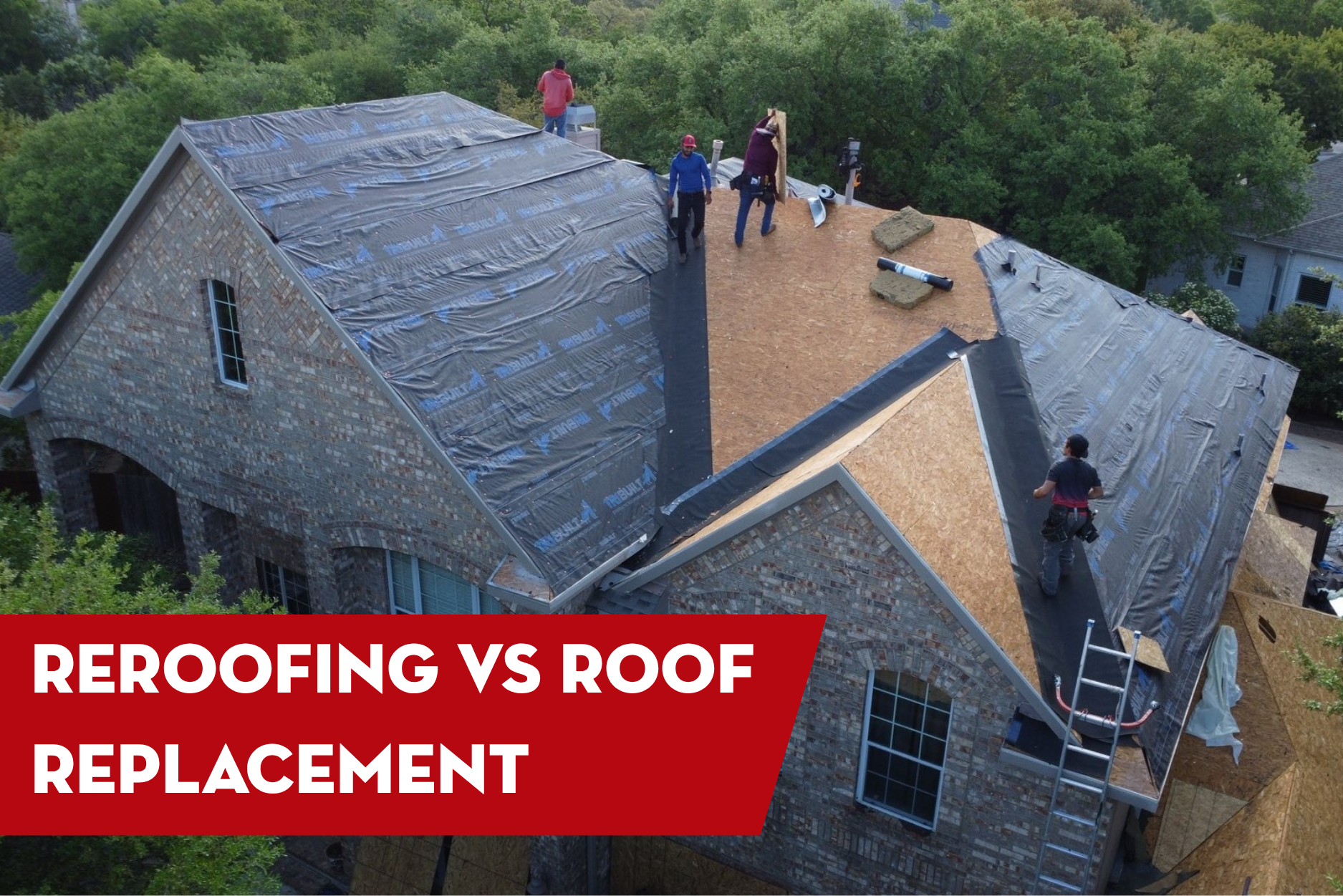
A roof replacement is a different animal. Everything comes off down to the wood decking, rotted sections are replaced, and a complete new system goes on: ice and water barrier in the valleys and around penetrations, synthetic underlayment, new drip edge and flashing, new vents, and the shingles themselves. You are not getting a new top layer. You are getting a new roof.
Why Most Texas Roofers Recommend Against Layering
Reroofing does get done. It is also something most established Central Texas roofing companies, KangaRoof among them, will not do on a home, and the reasons come down to how roofs fail here.
Heat retention
Two layers of asphalt hold roughly twice the heat. On a 100F plus July afternoon in Round Rock, a dark shingle roof runs far hotter than the air. With one layer it radiates off and vents through the attic. With two, the lower layer bakes under the upper one, both cook faster, and the attic runs hotter, which raises your cooling bill. Heat is why a 30 year shingle rarely sees 30 years in Texas, and layering makes it worse.
Hidden decking damage
The most important part of a roof is the part you cannot see. When we tear off a 15 year old Round Rock roof, we regularly find soft decking around plumbing vents, at the bottom of valleys, and along eaves where gutters overflowed. Every one of those spots gets cut out and replaced before new shingles go on. A reroof covers all of it. The rot keeps spreading, nails lose their grip, and the first sign you get is a ceiling stain. You paid for a new roof and kept the old problem.
An uneven base and extra weight
A second layer follows the surface of the first. Curled tabs and humps telegraph through, so the new shingles never lie flat, seal unevenly, and are more likely to be lifted by wind or bruised by hail. It is also heavier: a second layer adds a load the framing was engineered to carry once, not twice, and on older homes that shows up years later as sag along the ridge.
Warranty, insurance, and inspection problems
Shingle manufacturers write their warranties around installation over a clean deck with the specified underlayment and flashing. As a general industry practice, many manufacturer warranties are shortened or do not apply to shingles installed over an existing layer, and a reroof reuses old flashing, which is where most leaks start. Many insurance carriers are also wary of layered roofs: some are reluctant to write a new policy on a home with two layers, and some evaluate a hail claim differently because the damage underneath cannot be assessed. Policies vary, so ask your agent. The deeper problem is that nobody can inspect what is underneath. A future roofer, a home inspector during a sale, or an adjuster after a hail storm can only see the top layer, and buyers commonly ask for a credit toward a full tear-off at closing.
When a Re-Roof Can Make Sense
A few situations where an overlay is a reasonable choice:
- A detached structure you do not plan to keep long, such as a shed or workshop with a sound single layer.
- A home you are selling as-is, where the buyer knows and the price reflects it. Even here, a tear-off usually returns more at closing than it costs.
- A budget that truly cannot stretch, where the alternative is doing nothing while a roof leaks. Ask about financing first; spreading a full replacement over time beats paying for the roof twice.
Not on the list: a typical 15 to 20 year old Round Rock home that has been through a decade of hail seasons. That roof has hidden problems, and an overlay hides them at your expense.
Reroofing vs Replacement: How the Cost Really Compares
A reroof costs less up front because it skips two things: the labor to tear off and haul away the old roof, and the deck repairs the tear-off reveals. The shingles and the labor to install them cost about the same either way. The savings are real but smaller than most homeowners expect, and they come from skipping the steps that protect the house.
A full tear-off replacement costs more up front. Per our Instant Roof Cost Calculator, asphalt shingle systems start around $350 to $618 per square installed depending on the shingle tier, and metal roofing starts around $1,150 to $1,470 per square, with steep-pitch and two-story homes costing more. That price includes tear-off, disposal, and the complete system, and it is guaranteed pricing: the quoted number is the number you pay.
The comparison that matters is total cost over the life of the roof. An overlay buys a shorter life on a compromised base, and when it fails the next roofer removes two layers instead of one, which costs more than a single-layer tear-off today. Add the warranty gap and the likely credit at resale, and the overlay is often the more expensive option by the time it is over.
For what a full replacement runs on a typical home here, read how much a new roof costs in Round Rock. If you are weighing materials, 5 popular roof types in Texas compares shingles, metal, and other options for this climate.
How to Decide: Start With a Free Inspection
A roof inspection answers the question in about an hour, and at KangaRoof it is free. Here is what we look at:
- Layer count. Checked at the eave. If there are already two layers, an overlay is off the table.
- Decking condition from the attic. Stains, daylight, soft spots, and moisture readings.
- Shingle, flashing, and vent condition. Granule loss, cracking, and brittleness, plus the pipe boots, wall flashing, and valleys where most leaks start.
- Storm damage. Hail bruising and wind lift. If the roof was hit, this may be an insurance conversation, and an overlay would bury the evidence.
You get photos, a plain explanation, and a written price that does not change. If a repair is all you need, we say so. If the roof is at the end of its life, we show you why. Schedule a free inspection or call (512) 388-7663.
Reroofing FAQ
Is reroofing the same as a roof replacement?
No. Reroofing adds a second layer of shingles over the existing roof without removing anything. A roof replacement removes everything down to the decking, repairs the wood, and installs a complete new system with new underlayment, flashing, and vents. Only a replacement gives you a new roof. A reroof gives you a new surface on an old one.
How many layers of shingles can a roof have?
Standard practice in the industry is a maximum of two layers of asphalt shingles. If your roof already has two, the only option at the end of its life is a full tear-off. Your roofer can confirm the layer count at the eave or around a vent.
Can you put a metal roof over shingles?
It is done in some cases, usually with furring strips over a single sound layer, but the same concerns apply: the decking cannot be inspected or repaired, and the old shingles hold heat under the panels. For most homes we recommend a tear-off first so the metal goes on a verified deck. See our metal roofing page.
Does a reroof affect my home's resale value?
Usually in the wrong direction. Home inspectors note a double-layer roof, and buyers commonly ask for a credit toward a future tear-off. A documented full replacement with a manufacturer warranty is a selling point. A second layer is a negotiation item.
Reroofing saves money the day the crew leaves and costs money every year after. For a typical Round Rock home, a full roof replacement is almost always the better investment. Not sure which one your roof needs? Book a free inspection and we will show you what is up there.
Related reading
Topics: