
Roof Warranties Explained: Manufacturer, Workmanship, Home
September 21st, 2026
6 min read
There are three different things people mean when they say "roof warranty," and they cover different problems. A manufacturer warranty covers defects in the shingles or roofing material. A contractor workmanship warranty covers mistakes in how the roof was installed. A home warranty is a service plan you buy separately, and most of them cover roofs only narrowly, if at all. The single most common misunderstanding we hear from Central Texas homeowners is assuming one of these covers the others, and finding out during a leak that it does not. This guide explains what each warranty actually covers and excludes, what "lifetime" really means, how enhanced manufacturer warranties work, whether coverage transfers when you sell, what voids it, and how to read the paperwork you already have.
The three kinds of roof warranty
1. Manufacturer material warranty
This comes from the company that made the shingles, metal panels, or tile. It covers manufacturing defects: shingles that crack, blister, curl, or lose granules prematurely because of how they were made. It does not cover damage from hail, wind, foot traffic, or other trades, and it does not cover installation errors. Most architectural shingles sold in Texas carry a "lifetime" limited material warranty, and the word "limited" is doing a lot of work. Coverage is usually full for an initial period and then prorated, and the strongest versions require registration and a certified installer. The details are in our post on why lifetime does not always mean lifetime.
2. Contractor workmanship warranty
This comes from the roofing company and covers the labor: nailing, flashing, underlayment, ventilation, and every detail of how the system was put together. If a valley leaks because it was flashed wrong or a pipe boot was seated badly, this is the warranty that pays. Workmanship warranties vary widely by contractor in length and terms, and they are only worth as much as the company standing behind them. A roofer that changes its name every few years or disappears after storm season leaves you with a piece of paper. Ask for the workmanship warranty in writing, ask how long it runs, and ask what it excludes. KangaRoof has been a family-owned Round Rock company since 1992, first as Feller Roofing and as KangaRoof since 2017, which matters when the question is who will answer the phone in year eight.
3. Home warranty plans
A home warranty is a service contract from a third-party company, often bought at closing or renewed annually, that covers repairs to home systems and appliances. Roof coverage is usually an optional add-on, not part of the base plan, and where it exists it is typically narrow: limited to repairing specific leaks over the living area, subject to a per-claim cap that may be lower than the cost of a real repair, with exclusions for pre-existing conditions, storm damage, flashing, gutters, skylights, and roofs past a certain age or in poor condition. Plans differ, but the rule holds: a home warranty is not a substitute for a manufacturer or workmanship warranty, and it is not insurance. Read the roof section of your plan before assuming it will help.
What each warranty covers, side by side
- Shingle cracks or premature granule loss from a defect: manufacturer warranty.
- Leak at a valley, wall, chimney, or pipe boot because of poor installation: contractor workmanship warranty.
- Hail, wind, or fallen-tree damage: none of the three. That is your homeowners insurance, which we cover in Will Insurance Pay for My Roof?
- A small leak over the living area on an older roof with no other cause: possibly a home warranty add-on, subject to its cap and exclusions.
- Normal aging from Central Texas heat and UV: none. Wear is not a defect, and no warranty or plan covers a roof that simply reached the end of its life.
"Lifetime" and proration
On a manufacturer warranty, "lifetime" generally means as long as the original purchaser owns the home, and it describes the length of the coverage window rather than a promise the roof will last that long. Inside that window, most lifetime warranties pay full replacement value only during an initial non-prorated period. After that, the manufacturer's share drops every year, so a valid defect claim in year 20 may cover a small fraction of the cost. The non-prorated period is the number to look for in your paperwork, because it is the part of the warranty with real money behind it.
Enhanced manufacturer warranties through certified installers
Shingle manufacturers offer upgraded warranty tiers that go beyond the standard material coverage, and those tiers are only available when a contractor the manufacturer has certified installs a complete system using that manufacturer's components: shingles, underlayment, starter strip, ridge cap, and ventilation from the same maker, installed to the manufacturer's specifications, and registered after the job. KangaRoof is a GAF Master Elite contractor, which is what allows us to offer GAF's enhanced warranties. The practical difference for a homeowner is a longer non-prorated window and, on the top tiers, workmanship coverage backed by the manufacturer itself rather than only by the installer. We break down the individual tiers in KangaRoof Explains the Benefits of GAF's Warranties. Two things to confirm before signing any replacement contract: whether the enhanced warranty is included in the price, and who is responsible for registering it, because unregistered enhanced coverage does not exist.
Roof warranty transfer when you sell
Transferability is worth checking before you list a house, because a transferable roof warranty is a real selling point and a non-transferable one is not. Common patterns across manufacturer warranties:
- Some transfer once to the next owner, usually within a set window after the sale and sometimes with a transfer fee.
- Some transfer but convert from "lifetime" to a fixed number of years for the new owner.
- Some do not transfer at all, and the coverage ends at closing.
Workmanship warranties follow the contractor's own terms and may or may not transfer. Home warranty plans usually can be transferred or purchased by the buyer as a separate transaction. If you are selling, gather the original roofing contract, the manufacturer registration confirmation, and the transfer instructions, and give them to your agent. If you are buying, ask for those same documents during the option period, and ask whether the transfer window has already passed.
What voids a roof warranty
Warranties come with conditions, and the conditions are where most denied warranty claims come from. The common ones:
- Unpermitted or unlicensed work. Repairs or replacements done without required permits or by someone who is not a qualified contractor.
- Layering. Installing new shingles over an old layer instead of tearing off. Many manufacturers void coverage on a layered roof, and Texas heat makes layered roofs fail faster anyway.
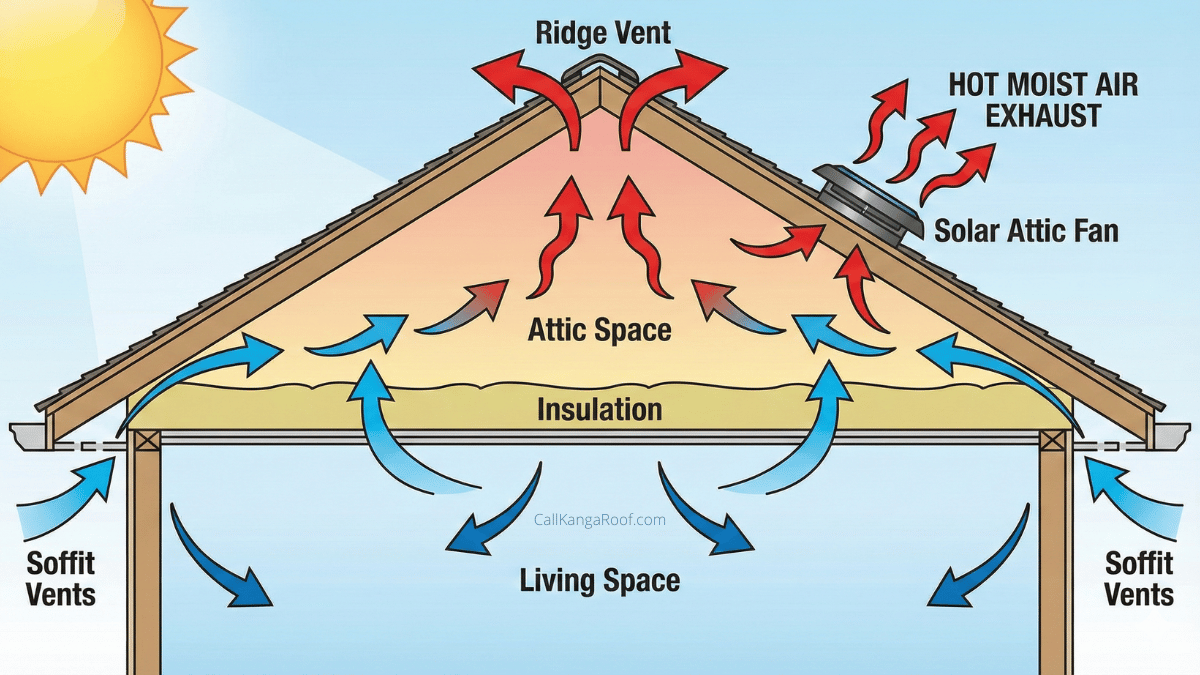
- Inadequate ventilation. Manufacturers specify minimum attic ventilation. A roof that cooks from underneath because the attic cannot breathe can lose its defect coverage.
- Walking on the roof. Foot traffic scuffs granules and cracks brittle shingles, and damage from it is excluded. Repeated foot traffic can be used to deny an otherwise valid claim.
- Other trades. Satellite dish installers, solar crews, HVAC techs, and painters who drill, step, or run cable across the roof without proper flashing. Damage they cause is theirs, not the manufacturer's, and it can complicate the rest of your coverage.
- Unapproved repairs and materials. Patching with a different manufacturer's shingles, using the wrong sealant, or letting an uncertified handyman "fix" a leak.
- Missed registration. Enhanced tiers that were never registered fall back to the basic warranty.
- Lack of maintenance. Clogged gutters, debris, and unaddressed damage that make a small problem into a large one.
Home warranty companies and roof leaks
Because this is the question that generates the most searches, it deserves a direct answer. Most home warranty plans either exclude the roof or offer limited leak repair as an add-on. Where roof leak coverage exists, it commonly applies only to leaks over the occupied living space, comes with a dollar cap per contract term, excludes damage from storms, and excludes roofs that were already in poor condition when the plan started. Some plans require you to use their assigned contractor, and the repair is typically a patch rather than a fix of the underlying cause. That can be fine for a single small leak. It is not a plan for a roof that is 20 years old and failing. If you are counting on a home warranty for roof protection, read the roof section of your contract carefully, note the cap and the exclusions, and treat it as a small supplement rather than real coverage.
How to read your roof warranty paperwork
Pull out the folder from your last roof replacement, or ask the contractor for copies, and find these items:
- The product line installed and the exact name of the manufacturer warranty tier.
- The non-prorated period and the proration schedule after it.
- The registration confirmation from the manufacturer, with the date.
- The contractor's workmanship warranty, its length, and its exclusions, in writing.
- The transfer terms and any transfer window or fee.
- The ventilation and maintenance requirements the coverage depends on.
- The claim procedure: who to call, what documentation is needed, and any deadlines.
If you cannot find the registration or the workmanship terms, that is a gap worth closing now rather than during a leak. If your roof is nearing replacement age, this is also the time to think about the warranty you want next. Our roof replacement page explains what a full system installation includes, and you can learn more about the company behind the workmanship warranty on our about page.
FAQ
Does a home warranty cover the roof?
Usually only as a limited add-on. Where roof coverage exists, it typically covers small leak repairs over the living area, with a per-term cap and exclusions for storm damage, flashing, gutters, and pre-existing conditions. Check the roof section of your specific plan.
What is the difference between a manufacturer warranty and a workmanship warranty?
The manufacturer warranty covers defects in the roofing material itself. The workmanship warranty, from the contractor, covers installation errors. Most leaks in the first several years come from installation, which makes the workmanship warranty the one that matters most in practice.
Can a roof warranty be transferred to a new owner?
Often, but on the warranty's terms: some transfer once within a set window, some convert to a shorter term, and some do not transfer. Find the transfer clause in your paperwork before listing the house.
Does a roof warranty cover hail damage?
No. Hail, wind, and storm damage are excluded from manufacturer and workmanship warranties and from nearly all home warranty plans. Storm damage is a homeowners insurance claim.
What voids a roof warranty?
The most common causes are installing over an old layer, inadequate attic ventilation, foot traffic and damage from other trades, unapproved repairs, missed registration, and skipped maintenance. Unpermitted work can also void coverage.
If you want a clear read on what your current roof is covered for, or what warranty a new roof would carry, call KangaRoof at (512) 388-7663 or contact us to schedule a free inspection.
Related reading
Written and published by KangaRoof, the Round Rock roofing company founded as Feller Roofing in 1992.
Topics: